
Why Power Washing Comes Before Every Good Paint Job
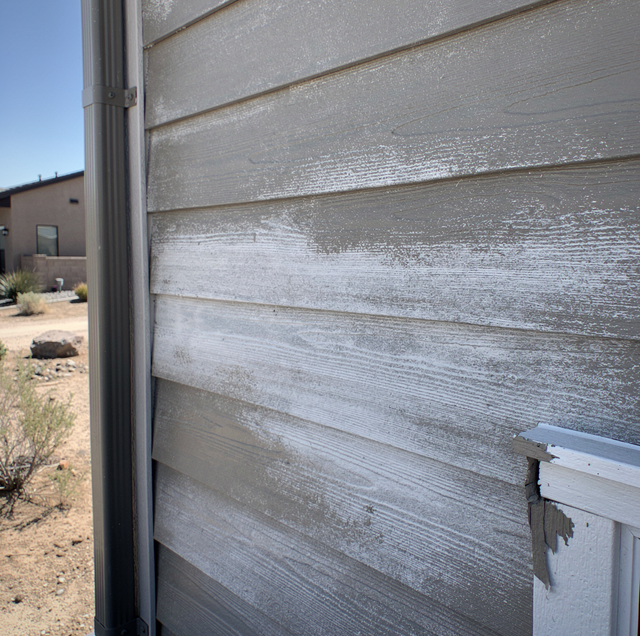
Why does a paint job go bad even when the product, the brush work, and the number of coats were all done right? More often than most homeowners expect, the answer traces back to something that happened before the painter ever opened a can: the surface underneath wasn't actually clean.
Paint Needs to Bond to Wood or Stucco, Not to a Layer of Dirt
Paint's adhesion depends on direct contact with the surface it covers, whether that's wood siding, stucco, or trim. A film of dust, pollen, chalky old paint residue, or biological growth on that surface means the new paint is really bonding to that layer instead, and that layer is not attached very well to anything. Months later, when that thin film of grime finally lets go, it takes the paint stuck to it along for the ride.
The Specific Things Washing Removes
Chalking: As exterior paint ages and breaks down under UV exposure, its resin degrades into a fine, powdery residue on the surface, a process called chalking. Rub a bare hand across old, weathered paint, and if it comes away with a whitish, powdery residue, that's chalk, and new paint applied directly over it will bond to the chalk layer rather than the paint underneath.
Mildew and algae spores: Organic growth on siding isn't just cosmetic; living spores beneath a fresh coat of paint can continue to grow, pushing through the new film and reappearing as dark spots within a season, especially in shaded, damp areas of a house.
Dust and airborne debris: Even a house that looks visually clean accumulates a layer of fine particulate on horizontal surfaces like window sills, trim ledges, and stucco texture pockets, all of which interferes with a smooth, continuous paint film.
Loose, peeling old paint: Pressure washing knocks loose flaking paint free that a visual inspection alone might miss, especially in protected areas like under eaves, revealing how much manual scraping will actually be needed before priming.
Why Pressure Level Isn't One-Size-Fits-All
Different surfaces call for distinct pressures and techniques, and using the wrong one causes its own damage.
Wood siding and trim are generally washed at moderate pressure with a wide fan tip, since going too aggressively can gouge softer wood grain or blow water up under lap siding, where it has nowhere to drain.
Stucco is typically cleaned with a soft-wash approach: lower pressure combined with a cleaning solution that dwells on the surface for several minutes before a low-pressure rinse, since stucco's porous texture traps water easily and high pressure can chip or crack the surface coat.
Masonry and concrete can generally withstand much higher pressure than wood or stucco, since the materials themselves are far more resistant to surface damage.
The Part That Gets Skipped: Dwell Time
Simply blasting a surface with plain water misses most of what a wash is supposed to accomplish. A cleaning solution needs contact time, often several minutes, sometimes longer on heavy mildew growth, to actually break down chalking and kill biological growth at the surface level before the rinse carries it away. Rinsing too soon just moves the grime around instead of removing it.
What Painters Look For Before They Ever Turn the Sprayer On
A walk-around before washing catches things the wash itself won't fix. Loose gutters or downspouts that could dump extra water against a wall during the wash, cracked caulking around windows and trim that could let water intrude behind the siding, and bare wood already showing early rot all get flagged before pressure washing starts, since washing a compromised area can make hidden damage worse rather than just cleaning the surface.
Why Some Areas Need a Second Pass
Shaded, north-facing walls, and areas under roof overhangs where rain rarely reaches, often carry heavier mildew and algae growth than sun-exposed walls a few feet away, simply because they stay damp longer between rains. Painters commonly go back over these areas with extra cleaning solution and a longer dwell time rather than treating the whole house identically, since a single pass calibrated for a sunny south wall often isn't enough for the shaded side of the same house.
Drying Time Matters as Much as the Wash Itself
A washed surface has to dry completely before primer or paint goes on, and that window is often underestimated. Wood siding can look dry on the surface within a few hours while still holding moisture inside the board, especially in shaded areas or where boards overlap. Painting over that trapped moisture can cause blistering as the moisture tries to escape through the new film while it's still curing. Most painters build in at least a full day, and often two, between washing and priming, longer in humid conditions or on absorbent surfaces like unsealed wood.
How a Painter Confirms the Surface Is Actually Ready
Beyond just looking dry, painters often run a simple adhesion check before committing to a full coat: taping a small strip to a washed, dried section and pulling it back to see whether anything transfers, or doing a light rub test to confirm no chalk residue remains. A surface that passes that check is actually ready for primer, not just appearing clean.
Frequently Asked Questions
A solution that dries mid-job leaves its own residue behind, sometimes as light streaking on darker trim or stone accents, and it stops working chemically once it's no longer wet. Painters keep the surface wet throughout the full dwell window by working in smaller sections at a time or rewetting as needed, then rinse from the bottom up so dirty runoff doesn't drag down into a section that's already been cleaned.
Wood siding is typically washed at 500 to 800 PSI through a wide fan tip. Stucco usually stays under that, often below 500 PSI, since the wash is doing most of its work through the cleaning solution rather than force. Masonry and concrete can handle 3,000 PSI or more with a narrower tip. A rotating "turbo" nozzle, which concentrates that pressure into a tight spinning point, is avoided on painted surfaces entirely, since it can cut a groove into soft wood in seconds.
Many carry a pinless moisture meter and want a reading below a set threshold before committing to primer, rather than going by the calendar alone. Morning dew and overnight humidity get factored in too: a painter might delay starting for a few hours on a heavy-dew morning even if the wash happened two full days earlier, since a damp start to the day resets part of that drying clock.
No. Scraping happens after the surface has fully dried, not while it's wet, since swollen, water-logged wood and paint edges are harder to cut cleanly with a scraper. Once dry, a flexible scraper is used to feather the transition edge between sound paint and bare wood, so the new coat doesn't telegraph a visible ridge line where the old paint stopped.
Not necessarily. A wash can kill everything on the surface, and mildew can still return within a season if the moisture source feeding that spot was never addressed: a sprinkler head hitting the wall, shrubs pressed against the siding, or a gutter that overflows in that exact corner. No amount of surface cleaning permanently solves regrowth if the wall keeps getting wet in the same place afterward.
Yes. It's also standard on delicate trim, like foam or synthetic stucco accents, and on siding with an older, thinning paint film that direct pressure could strip prematurely. The chemical is typically metered through a low-pressure downstream injector at the wand tip rather than delivered through the high-pressure stream itself, so the cleaning comes from dwell time on the surface, not mechanical force.
A rushed wash is the cheapest-looking shortcut in a repaint, since nothing about it shows up on the invoice or in the fresh coat of paint applied that same week. Chalk, spores, and trapped moisture left behind under new paint don't stay hidden for long, though: they show up as blistering, spotting, or a section that lets go within the first year. Getting the wash right the first time costs a fraction of stripping and repainting the same wall over again.
Schedule a free painting estimate — proper washing and prep are built into every exterior job. True Coat Painting serves Reno, Sparks, and Spanish Springs. Call (775) 227-0618.
