
Eggshell vs Satin vs Semi-Gloss: Which Wall Finish Is Right for Each Room
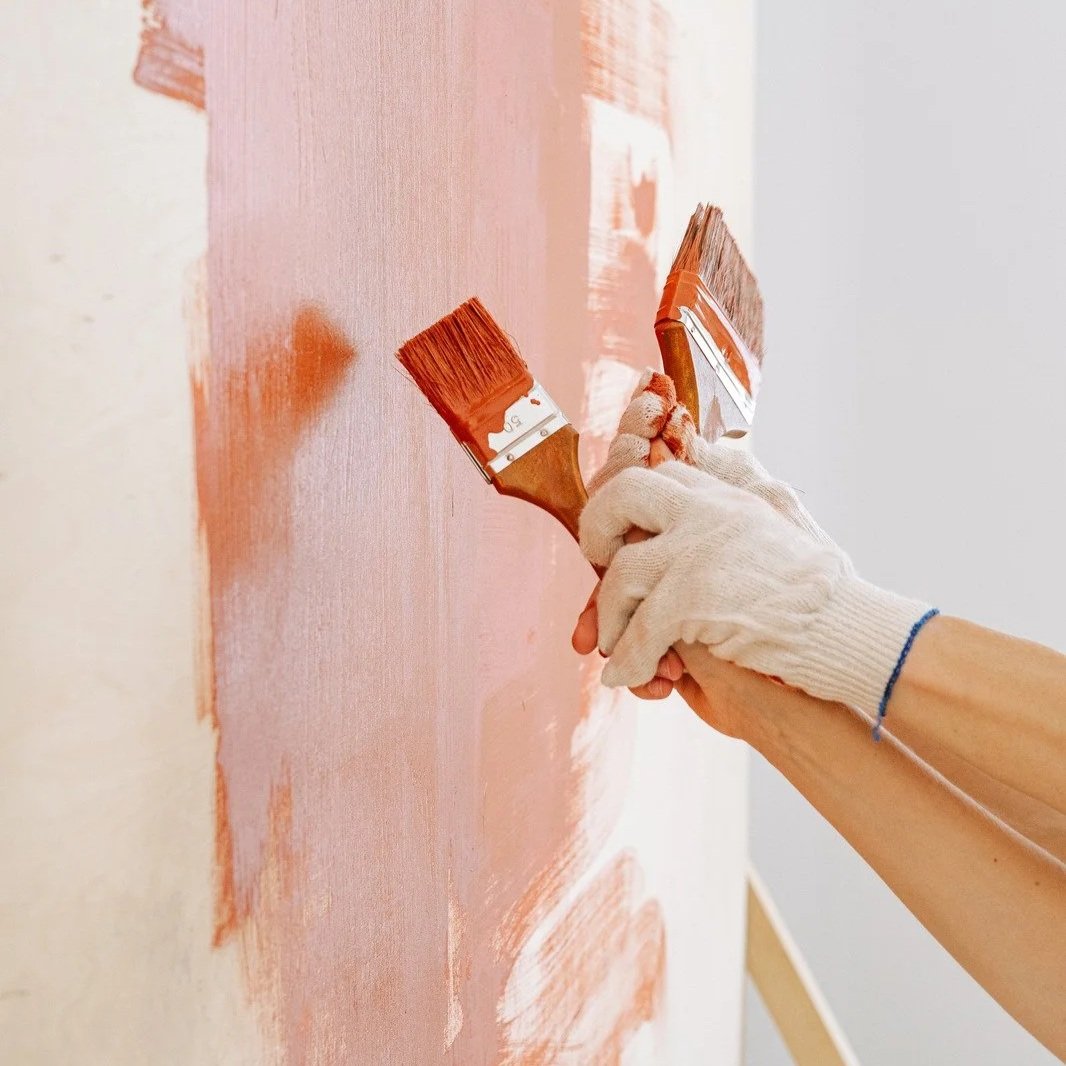
The wall behind the kitchen sink looked perfect for six months. Then one morning, the sun came in low through the window and caught a faint smear of grease near the faucet where a hand had rested a hundred times. The paint hadn't worn through. It had just lost the sheen in that one spot, and now the whole wall looked uneven in side light.
That's almost always a sheen problem, not a paint problem. The finish was too flat for what the wall was being asked to do.
Picking between eggshell, satin, and semi-gloss isn't really about taste. It's about how much abuse the surface is going to take, how much light is going to hit it, and how forgiving you need the wall to be.
What sheen actually does
Paint is color suspended in a binder — usually an acrylic resin — with pigments and additives mixed in. When it dries, what you see on the wall is the resin film holding everything together. The amount of light that resin film bounces back is what makes a paint flat, matte, eggshell, satin, semi-gloss, or full gloss.
Higher sheen means more resin sitting on top of the pigment, and more resin means a smoother, harder surface. That's why glossier paints clean better and stand up to scrubbing — there's more polymer to take the hit. It's also why they show every imperfection underneath. Light bouncing off a glossy finish picks up bumps, ridges, and roller marks the way a side-lit photograph picks up wrinkles in fabric.
Sheen is graded on a percentage scale measuring how much light reflects off the surface at a 60-degree angle. The exact cutoffs vary by manufacturer, but the order is the same everywhere.
| Sheen | Approx. light reflectance | What it feels like | Cleanability |
|---|---|---|---|
| Flat / matte | 0 – 5% | No shine, velvety, hides flaws | Wipe lightly, don't scrub |
| Eggshell | 10 – 25% | Slight glow, looks like an eggshell tilted in light | Damp sponge OK, no abrasives |
| Satin | 25 – 35% | Soft pearl glow, picks up window light | Scrubbable with mild soap |
| Semi-gloss | 35 – 70% | Noticeably reflective, almost like enamel | Scrubs hard, takes cleaners |
| High-gloss | 70%+ | Mirror-like | Scrubs like a kitchen counter |
Eggshell: the soft-glow workhorse for low-traffic walls
Eggshell is the default for bedrooms, formal living rooms, dining rooms, home offices, and most hallway walls that don't get touched constantly. The reflectance is low enough that drywall texture stays quiet — a wall with a level-four finish and a couple of small patches will read as smooth under eggshell paint, even in afternoon side light from a window.
The trade-off is durability. Eggshell takes a damp sponge with a little dish soap, but a scrub pad will burnish a dull spot into the finish. Pencil marks, fingerprints near light switches, and the dark smudge a chair back leaves behind come off, but slowly. In a high-traffic mud room or a hallway with kids, eggshell loses its battle within a year or two.
Where eggshell earns its keep is rooms with dramatic lighting. Bedrooms with morning sun, living rooms with big west-facing windows, dining rooms with chandeliers — those rooms punish higher-sheen finishes because the reflected glare turns every drywall seam into a visible line. Eggshell quiets all of that.
It's also the gentler choice on older homes where the walls have been patched and repainted a dozen times. Plaster walls especially want a low sheen — the texture is rarely flat, and a satin or semi-gloss finish on plaster looks like a topographical map at the wrong angle.
Satin: the kitchens, baths, and busy-room finish
Satin is the middle-ground answer for any wall that's going to get touched, splashed, or wiped down regularly. Kitchens, bathrooms, kids' bedrooms, laundry rooms, mud rooms, family rooms, stairwell walls, and the lower three feet of any hallway that sees daily traffic — all satin territory.
The reflectance jump from eggshell to satin is bigger than the label numbers suggest. Eggshell at 18% and satin at 30% looks like a small gap on paper. On the wall, satin clearly catches light from windows and lamps, especially on long uninterrupted runs. It reads as "slightly polished" rather than "slightly glowing."
That extra reflectance is what makes satin scrubbable. The resin film is denser, the surface is harder, and cleaners that would burnish eggshell don't mark satin. A mild bathroom cleaner, a magic eraser used with a light touch, even a degreaser cut with water — satin walls handle them.
The cost of that durability is honesty. Satin doesn't hide drywall sins. A wall that wasn't sanded flat between coats of joint compound will show every ridge. A nail pop that the previous owner skim-coated halfway will catch the light. If the walls aren't smooth to begin with, the painter has to do more prep before satin goes on, or the finish will magnify what's already there.
The kitchens-and-bathrooms argument is mostly about moisture and grease. Both will sink into a low-sheen finish and stay. Satin's tighter resin film resists the absorption, which is why grease near a stove or steam splatter near a shower wipes off satin and stains eggshell.
Semi-gloss: trim, doors, and the rooms with steam
Semi-gloss is the standard finish for interior trim, doors, baseboards, window casings, crown molding, cabinet boxes, and built-in shelving. It's also the right call for bathroom ceilings in homes where the shower vent is undersized, or the bathroom doesn't have a window — places where steam condenses on overhead surfaces every day.
Trim wants semi-gloss for two reasons. Doors and baseboards take physical contact — shoes, vacuums, mop handles, dogs, kids' toys — and the harder film resists that contact. Trim also reads as a deliberate architectural element, and a slightly reflective finish helps it stand out from the wall behind it. Eggshell trim against eggshell walls disappears. Semi-gloss trim against eggshell walls carries the visual line.
On walls, semi-gloss is overkill almost everywhere. The high reflectance shows every imperfection — a small drywall bump, a roller stipple that didn't lay down right, a brush mark in the cut-in line. It also reads as visually busy in rooms with a lot of glass or large lamps. The exception is a wall in a room with constant moisture: a shower wall without tile, a laundry room with a utility sink, a powder room where the toilet runs warm in winter.
For families with kids, some painters put semi-gloss on hallway walls below chair-rail height — the zone where bikes, scooters, and backpacks make contact. The wall above stays in eggshell or satin, and the band below takes the abuse. It works. It also commits the home to a two-tone hallway, which is a design choice not everyone wants.
How to choose, room by room
Most homes mix all three sheens. Eggshell on most walls. Satin in the rooms with water, grease, or constant touching. Semi-gloss on every piece of trim, every door, and the few wall surfaces that genuinely need it. The table below covers the common rooms and the usual call.
| Room | Walls | Ceiling | Trim & doors | When to deviate |
|---|---|---|---|---|
| Living room | Eggshell | Flat | Semi-gloss | Satin, if it's also a play room |
| Dining room | Eggshell | Flat | Semi-gloss | — |
| Primary bedroom | Eggshell | Flat | Semi-gloss | — |
| Kids' bedroom | Satin | Flat | Semi-gloss | Eggshell, only if the walls are perfectly smooth |
| Home office | Eggshell | Flat | Semi-gloss | Satin, if you mount monitors and whiteboards |
| Hallway | Satin | Flat | Semi-gloss | Two-tone with semi-gloss below chair rail in family homes |
| Kitchen | Satin | Satin or flat | Semi-gloss | Semi-gloss splash zone behind the stove on a non-tiled wall |
| Full bathroom | Satin | Semi-gloss or satin | Semi-gloss | Semi-gloss walls, if there's no window and no decent vent |
| Powder room | Satin | Flat | Semi-gloss | — |
| Mud room / entry | Satin | Flat | Semi-gloss | — |
| Laundry room | Satin | Satin | Semi-gloss | — |
| Stairwell | Satin lower, eggshell upper | Flat | Semi-gloss | Single sheen, if walls are exceptionally smooth |
| Basement (finished) | Eggshell or satin | Flat | Semi-gloss | Satin, if humidity ever climbs above 60% |
| Garage interior | Satin | Flat | Semi-gloss | — |
That's the default map. A room with unusual lighting, unusual wall condition, or unusual use can pull the answer one notch in either direction.
What changes the picture: wall condition, lighting, and color
Three variables can override the room-by-room defaults.
The first is wall condition. Smooth drywall takes any sheen. Older plaster, sprayed texture, multiple generations of patches, and walls where the previous paint job left brush marks all push the answer toward lower sheen. Going up to satin or semi-gloss on a textured wall turns the texture into the most prominent feature of the room.
The second is lighting. A wall hit by direct sun for two or three hours a day, especially morning or afternoon side light, magnifies any sheen above eggshell. Rooms with windows on two perpendicular walls catch even more. The cleaner the wall has to look at 7 a.m. with a low sun raking across it, the lower the sheen should be.
The third is color depth. Deep saturated colors — true navy, forest green, charcoal, deep terracotta — show sheen differently than light colors. A dark wall in satin looks much glossier than a light wall in satin, because the contrast between the dark pigment and the reflected highlight is sharper. Many painters drop a sheen step when the homeowner picks a deep color, so a dark accent wall goes to eggshell and a deep trim color goes to satin.
Those three together explain most, "the sheen looked different than I expected" complaints after a paint job. The chip looked right under store lighting. The wall didn't, because the wall had texture and morning sun the chip didn't.
FAQs
You can, but you give up something either way. Alleggshell means the trim disappears into the walls and the bathroom walls struggle with moisture. All-satin means every drywall imperfection shows up and the bedrooms can feel slightly cold under direct light. All-semi-gloss is rare outside of commercial buildings and reads as institutional. Mixing sheens by room is the standard call.
Satin handles a normal kitchen — splatter near the stove, fingerprints around switches, a wet sponge wipe on the backsplash area — without a problem. The exception is a wall that takes direct grease spray from a high-heat stove or a wall that gets daily contact with cookware. Those zones benefit from semi-gloss, or from a sprayed-on backsplash material that isn't paint at all. For the rest of the kitchen, satin is the cleaner-looking choice.
Almost always touch-up paint applied with a roller over a wall that was originally sprayed, or touch-up applied over partially worn paint. The new patch sits at a different reflectance than the surrounding wall, and side light makes the patch obvious. The fix is to repaint the full wall corner-to-corner rather than spot-touching the patch. Wall sheen wants to be continuous.
Not exactly. There's no industry standard on the sheen scale — each manufacturer sets its own cutoffs. One company's eggshell can sit closer to a competitor's satin, and one company's satin can sit closer to a competitor's semi-gloss. If a room is being repainted in the same finish it had before, matching the brand is the safer call than matching the label.
Flat almost everywhere. Ceilings rarely get touched, they reflect a lot of ambient light back into the room already, and any sheen above flat will make ceiling seams and uneven joint compound visible. The exception is a bathroom ceiling with poor ventilation, where satin or semi-gloss resists the steam condensation that would otherwise stain a flat finish over a few years.
Usually no. Switching sheen on a single wall in a room is a tell — the eye notices the difference instantly, even if the color is the same. Accent walls work better through color contrast than sheen contrast. The rare exception is a deeply textured accent wall, like a wall with a wood plank treatment, where a flat or matte finish reads as more deliberate against satin walls elsewhere.
The simpler way to think about it
Every wall in the house faces the same question over the years it holds its finish: how often will it get touched, splashed, or scrubbed. If the honest answer is "rarely," eggshell is the right finish and will look better than satin under any kind of light. If the answer is "regularly," satin earns its keep and won't look out of place. If the answer is "constantly, with shoes or steam or grease," semi-gloss is the only finish that survives, and the visual cost of the higher sheen is worth paying.
Trim is a separate conversation that already has an answer: semi-gloss, almost always. Ceilings are an even shorter conversation: flat, with the rare moisture exception.
The painter you want is the one who walks the rooms with you and points to specific walls — this one takes morning sun, this one is going to get hit by the dishwasher door, this one has a level-three drywall finish and won't hide much — and picks the sheen based on what each wall is actually going to do. The painter to be cautious of is the one who quotes a single sheen for the whole house without looking at any of it.
