
How Much Does Interior House Painting Cost Per Square Foot
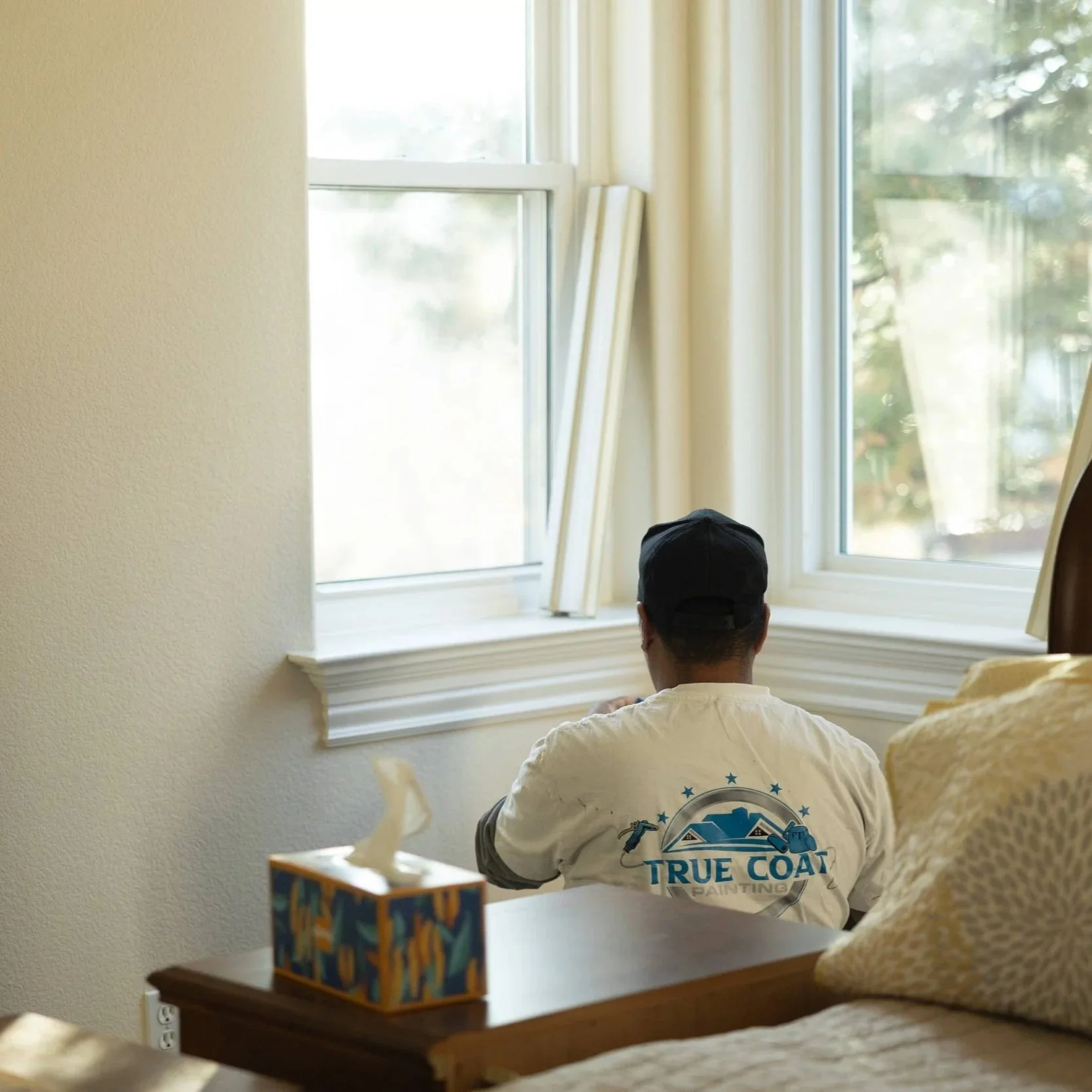
You are standing in the middle of the living room with a notebook. Three painters have walked the house this week. The first quote came in at $2,400. The second at $4,100. The third at $5,800 — and that one didn't include the trim. All three measured the same rooms. Two of them threw out a number in dollars per square foot before they left. The numbers weren't close.
This is the part of hiring a painter that makes most people want to give up and pick the middle bid.
There is a reason the same job draws three wildly different per-square-foot prices, and once you see what the painter is actually charging for, the real range gets pretty narrow.
"Per square foot" doesn't mean what you think it means
First thing to know: there are two completely different ways a painter can quote you per square foot, and they produce numbers that aren't anywhere near each other.
The first method measures the wall surface area — the actual painted surface, walls plus ceilings if included. A 12-by-15 room with 9-foot ceilings has roughly 486 square feet of wall surface (perimeter × height, minus window and door openings). That's what the painter is actually rolling and brushing.
The second method measures the floor area of the home — the 1,800 square feet on your tax record. That's what most homeowners hear in casual conversation. A 1,800 square-foot home has roughly 4,500 to 5,500 square feet of paintable wall surface depending on ceiling height and layout.
So, when one painter quotes $2.50 per square foot and another quotes $5.50, they may both be right. They are just counting different square feet. Always ask: is that per square foot of wall, or per square foot of floor? The answer changes the bid by 2 to 3x.
| Quote method | Typical 2026 range | How to spot it on a bid |
|---|---|---|
| Per square foot of wall surface | $2 – $6 per sq ft | Bid references "wall area" or "painted surface" |
| Per square foot of home floor area | $1.50 – $4 per sq ft | Bid references "home size" or your home's listed sq ft |
| Per room (flat) | $300 – $1,000 per room | Standard for small jobs and accent walls |
| Hourly + materials | $50 – $90 per hour + paint | Common for touch-ups and odd one-off rooms |
The cleanest quotes break it out: total project price, with a line item showing the area measured. A bid that just throws "$3.50/sq ft" at the wall without telling you which area it measured, is a bid you can't compare to anything else.
The real per-square-foot range, room by room
When you are comparing the same thing across painters, interior painting in 2026 lands in a fairly tight band. Wall-area pricing runs $2 to $6 per square foot in most U.S. markets, with the spread driven by surface condition, paint quality, prep work, and how much detail the room has.
For a homeowner trying to budget without measuring every wall, room-level pricing is easier. The numbers below assume one-color repainting of walls and ceilings, two coats of mid-grade latex, light patching, normal door and window count, and crew-spray-and-roll application. Trim sits in its own row because trim work is its own beast.
| Room or area | Typical 2026 cost | What changes the price |
|---|---|---|
| Small bedroom (10×12) | $350 – $600 | Closet doors, ceiling included, accent wall |
| Standard bedroom (12×14) | $450 – $800 | Vaulted ceiling adds $150–$300 |
| Master bedroom (14×18) | $600 – $1,100 | Walk-in closet, tray ceiling, en suite trim |
| Living room (15×20) | $600 – $1,200 | Tall ceilings, fireplace, lots of trim |
| Kitchen (walls only, no cabinets) | $400 – $900 | Cabinet cut-ins, behind appliances, soffit |
| Bathroom (full or half) | $300 – $650 | Bathroom-grade paint costs more per gallon |
| Hallway and stairwell | $400 – $900 | Stairwell height drives this fast |
| Full 1,500 sq ft home interior | $3,000 – $6,000 | Whether trim and doors are included |
| Full 2,500 sq ft home interior | $5,000 – $10,000 | Trim is usually 20–30% of the total |
| Trim and doors per room | $200 – $500 | Type of trim, condition, latex vs oil |
Trim catches people off guard. Painting trim, baseboards, doors, and casings takes about as long per room as painting the walls — sometimes longer — because every piece is cut by hand with a brush, and oil-based or hybrid alkyd trim paint takes more coats and longer dry time than wall paint. A bid that's missing a trim line item is usually a bid that didn't include trim.
What actually moves the per-square-foot number
Two homes with identical square footage can land at opposite ends of the $2–$6 range. The difference isn't markup. It's how much work happens before the paintbrush ever touches the wall.
The biggest single variable is surface condition. A house with smooth, recently painted walls that just need a color refresh is at the low end. A house with crayon marks, nail holes from a previous tenant, popcorn texture that's flaking, water stains around an old leak, or wallpaper that needs to come down can run double — sometimes triple — what the smooth-wall version costs. Patching, sanding, priming over stains, and skim-coating textured walls is all labor, and labor is the biggest line on a paint bid.
Paint quality is the second variable, and the gap is bigger than most people realize. A gallon of contractor-grade flat paint runs $25 to $35. A gallon of premium washable scrubbable interior paint runs $60 to $90. On a whole-house job that's 25 to 35 gallons, which is the difference between an $800 paint bill and a $2,400 paint bill. Premium paint also covers in fewer coats, which lowers labor — but the per-gallon cost still shows up on the quote.
Prep work and protection is the third variable, and it's the one that hides on bids that look cheap up front. Moving furniture, draping floors and built-ins, masking trim, removing outlet covers, and protecting flooring against drips takes a crew hours per room. Bids that skip this prep are bids you regret when the cleanup includes paint on the hardwood.
Ceiling height and layout is the fourth. A standard 8-foot ceiling lets a crew work off short ladders and a single setup. A 14-foot great room needs scaffolding, longer reach, more time per square foot, and slower rolling because gravity is working against the painter. Tall foyers and stairwells routinely cost 1.5 to 2 times what the same square footage would cost in a normal-ceiling room.
| Cost driver | Range it adds to the per-sq-ft price | Why |
|---|---|---|
| Wall condition (smooth → heavy patching) | +$0.50 to +$2.50 | Labor for patching, sanding, skim coats, priming over stains |
| Paint grade (contractor → premium) | +$0.30 to +$1.20 | Material cost; sometimes offset by fewer coats |
| Trim and door painting | +$0.75 to +$2.00 | All hand-brushed; often slower than wall painting |
| Ceiling height > 9 ft | +$0.50 to +$1.50 | Ladders, scaffolding, slower production rate |
| Color change (dark over light, or vice versa) | +$0.40 to +$1.00 | Extra primer coat or extra topcoat for full coverage |
| Wallpaper removal | +$1.00 to +$3.00 per sq ft | Steaming, scraping, skim-coating back to smooth |
| Popcorn ceiling repair or removal | +$1.50 to +$3.50 per sq ft (ceiling) | Scraping, skim-coating, dust containment |
Cheap bids tend to be cheap because they assumed the walls were ready for paint. The expensive bids are usually the painters who walked the house, opened a closet door, looked at the hallway trim, and added line items for what they saw.
What gets left out of a low bid
A low bid isn't always a problem. It usually means something was excluded. Things commonly left out of cheap bids: trim and doors, ceiling painting, closet interiors, behind appliances in the kitchen, garage walls, primer over stains or dark colors, wall patching beyond pinholes, furniture moving, and floor protection beyond a thin drop cloth. They're the line items the painter decided not to include to keep the bid number low.
The right question to ask any bidder is: What's not included in this price? A painter who can answer clearly has thought about the job. A painter who waves it off and says "we'll handle whatever comes up" is the painter whose change-order surprises hit you at month-end.
When "per square foot" stops being useful
Per-square-foot pricing works well when the job is reasonably uniform — a few rooms of similar shape, normal trim, standard heights. It breaks down on three kinds of jobs.
The first is small jobs. Painting a single bathroom or a hallway accent wall has fixed costs — driving out, setting up, masking, cleaning brushes at the end — that don't scale with square footage. A 60-square-foot powder room won't cost $120. The minimum for a professional crew to show up is usually $300 to $500 regardless of how small the room is.
The second is complex rooms. A great room with vaulted ceilings, exposed beams, two-story windows, and a stone fireplace doesn't map cleanly to per-square-foot pricing because most of the labor is in the awkward access — getting to the high cuts above the beams, working around the windows, brushing the trim at the top of the stairwell. A bid for a complex room is almost always custom rather than formulaic.
The third is detail-heavy interiors. Wainscoting, coffered ceilings, chair rails, picture molding, and accent walls each add real labor that doesn't show in the wall-area math. A 200-square-foot dining room with wainscoting and a coffered ceiling can take longer to paint than a 400-square-foot bedroom with smooth walls. Per-square-foot pricing on a detailed room undershoots every time.
For those jobs, ask the painter to break the bid into line items by surface — walls, ceiling, trim, doors, accent walls, ceiling beams. That's the version you can actually compare across companies.
FAQs
It depends on the job. For a uniform whole-house repaint, per-square-foot pricing is more accurate and easier to compare across bids. For one or two rooms, per-room pricing is cleaner because it bakes in the minimum-trip cost. For complex spaces with vaulted ceilings, lots of trim, or wallpaper removal, neither formula works — ask for an itemized bid instead.
Bathrooms and kitchens both need moisture-resistant paint, which costs more per gallon than standard wall paint. Bathrooms also have more cut-ins — around the mirror, the vanity, the tile line, the exhaust fan — which is hand-brush labor rather than fast rolling. Kitchens add cabinet cut-ins, behind-appliance areas, and soffits. On a per-square-foot basis, both can run 20 to 40% higher than a bedroom.
Standard prep — moving small furniture, draping floors, light patching, masking outlets — is usually included in a normal per-square-foot quote. Heavy prep — wallpaper removal, skim-coating textured walls, popcorn ceiling repair, lead-paint testing on older homes — is almost always a separate line item. Always read the prep line carefully. A bid with no prep line item assumed your walls were ready, and "wasn't expecting that" is the most expensive surprise in the painting trade.
Wall painting is fast — a roller covers a lot of square footage quickly. Trim is slow because every inch is cut by hand with a brush, and most trim takes at least two coats with sanding between coats. A standard six-panel interior door takes 30 to 45 minutes per side once you factor in the sanding, brushing, drying, and recoating. On most jobs, trim and doors are 20 to 30% of the total labor — sometimes more on detail-heavy homes.
In a typical interior repaint, materials run 15 to 25% of the total bid. The rest is labor. Paint itself runs $25 to $90 per gallon depending on grade, and a whole-house repaint of 1,800 square feet uses roughly 25 to 35 gallons including primer. On a $5,000 whole-house bid, that's $900 to $1,200 in materials and the rest in labor, masking supplies, and shop overhead.
Usually yes, but not always. A small color shift — beige to off-white — often paints in two coats just like a same-color refresh. Going from dark to light almost always needs a primer coat plus two topcoats, and going from light to a deep saturated color often needs a tinted primer plus two topcoats. Each extra coat adds 30 to 50% to the labor on that section. Bold accent walls or feature ceilings can run higher per square foot than the rest of the home for the same reason.
What a good painting quote actually looks like
The bid worth choosing isn't always the lowest one. It's the bid where you can read the line items and know exactly what's being painted, what's not, what kind of paint is going on the wall, and what happens if the painter finds something unexpected once the furniture is moved.
A good bid breaks out walls, ceilings, trim, and doors as separate line items, names the paint product and finish for each surface, calls out which rooms are included by name, lists any prep work as its own line, and has a clear scope for what happens if a surprise comes up — a soft cap, a per-hour change rate, or a written change order before extra work starts. A bid like that lets you compare painter A to painter B without trying to do mental math on what each one decided to leave out.
The painter you want is the one who walked the whole house, opened the closets, looked at the trim, and gave you a number that reflects what they saw. The painter to be careful with is the one who looked at the front room, asked the square footage, and emailed you a per-square-foot quote from the truck.
