
How High-Desert Sun and UV Wear Down a Paint Job
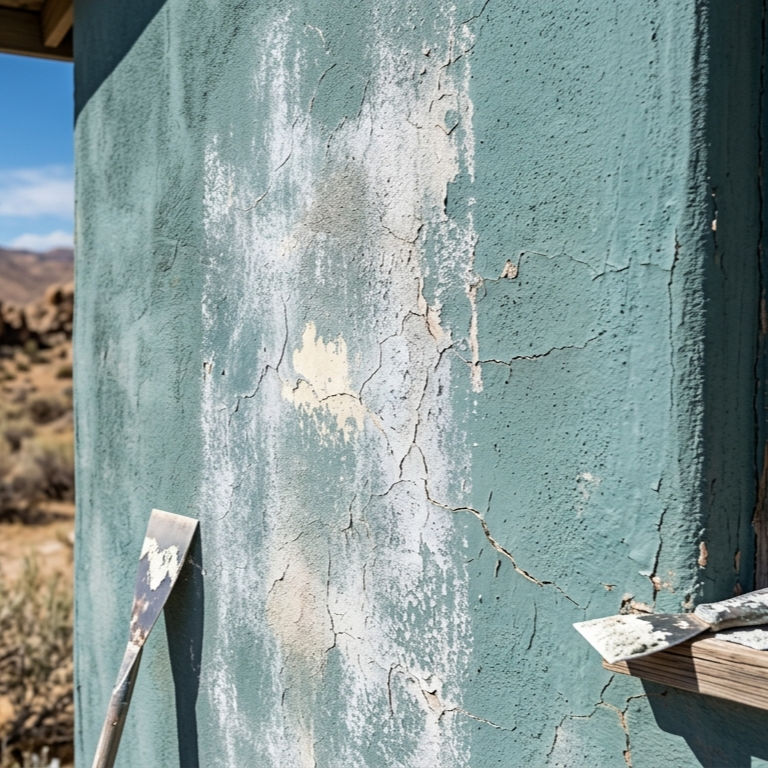
Quick Answer: High-desert sun and UV wear down a paint job in several ways beyond just fading. Intense UV breaks down the paint's pigments (fading the color) and its binders (the glue holding the paint together), which leads to chalking — a powdery residue as the surface degrades — as well as cracking, peeling, and general breakdown over time. The high-desert climate's dry air and big temperature swings add stress that contributes to cracking and wear. Higher elevation means thinner air and more intense UV reaching the surface. To protect a paint job, use high-quality UV-resistant paint, proper surface preparation and application, sun-appropriate colors, and a sensible repainting schedule. In this climate, intense sun is the dominant wear factor.
In a high-desert climate, the sun does more to a paint job than just fade the color — it actively breaks the paint down in several ways. The intense UV and harsh conditions wear paint faster and more thoroughly than milder climates. Understanding the full range of how high-desert sun and UV degrade a paint job helps you appreciate why quality paint and proper care matter so much here. Here's what the sun does to your paint.
UV Breaks Down Paint at the Chemical Level
The core of the problem is what ultraviolet (UV) radiation does to paint. Paint is made of pigments (which provide color) and binders (which hold the paint together and bond it to the surface). UV light breaks down both. As it degrades the pigments, the color fades. As it breaks down the binders, the paint loses integrity — the very structure holding it together weakens. The high-desert climate delivers intense, abundant UV, so this breakdown happens faster and more aggressively than in cloudier or lower-elevation places. So the sun isn't just bleaching the color; it's chemically degrading the paint itself, which leads to several visible kinds of wear.
Fading and Chalking
Two of the most common effects are fading and chalking. Fading is the loss of color as UV degrades the pigments — the bright, saturated color dulls and lightens over time. Chalking is a powdery, chalky residue that forms on the surface as the binder breaks down and releases the pigment, leaving a film you can rub off with your hand. Chalking is a clear sign that the paint's binder is degrading under UV. Both fading and chalking are signs of paint deterioration from sun exposure, and both occur faster in intense, high-desert UV. So a paint job here can show dulled color and a chalky surface sooner than you'd expect, signaling the UV is wearing it down.
| Effect of sun/UV | What's happening |
|---|---|
| Fading | UV degrades pigments; color dulls |
| Chalking | Binder breaks down; powdery residue |
| Cracking | Paint loses flexibility, stressed by swings |
| Peeling | Adhesion fails as paint degrades |
| General breakdown | Overall loss of integrity and protection |
Cracking and Peeling
As UV breaks down the binder and the paint loses its integrity and flexibility, it becomes prone to cracking. The high-desert climate's significant temperature swings — hot days and cool nights, seasonal extremes — cause the surface and paint to expand and contract, and paint that's been degraded by UV and lost its flexibility can crack under that stress. Once the paint's adhesion and structure are compromised, peeling can follow, with the paint lifting and flaking off the surface. So the sun's breakdown of the paint, combined with the climate's temperature stresses, leads to cracking and peeling over time — not just fading. These are signs that the paint has degraded enough that its protective function is failing, which exposes the surface beneath.
The Dry Air and Elevation Factor
The high-desert environment adds to the sun's effects. The dry air contributes to the conditions that stress paint, and the big temperature swings drive the expansion and contraction that stress and crack degraded paint. Higher elevation plays a role too: thinner air at elevation filters out less UV, so more intense UV reaches the surface, intensifying all the UV-driven breakdown. So a paint job in this region faces a combination — intense, elevation-amplified UV plus dry, swinging conditions — that wears it down faster and in more ways than a milder climate. The sun is the dominant factor, but the whole environment conspires against the paint.
Watch for chalking as an early sign the sun is winning. If you rub the painted surface and a chalky residue comes off on your hand, the binder is breaking down under UV. Catching chalking and other early wear signs lets you plan repainting before the paint cracks, peels, and stops protecting the surface beneath.
How to Protect a Paint Job Here
Since you can't change the high-desert sun, protecting a paint job comes down to the right choices. High-quality, UV-resistant paint is the foundation — quality paints with durable, UV-resistant pigments and binders resist all these forms of breakdown far better than cheap paints, which is especially important where UV is so intense. Proper surface preparation and application ensure good adhesion and performance, helping the paint resist peeling and last longer. Choosing colors and finishes suited to intense sun helps, since some hold up better under UV. And repainting on a sensible schedule keeps the surface protected before the paint fully degrades. In this climate, these measures meaningfully extend a paint job's life against the sun's relentless wear. A painting professional experienced with the high-desert climate can recommend and apply the right system to give your paint the best defense.
Frequently Asked Questions
Intense UV breaks down the paint's pigments (fading the color) and its binders (the glue holding the paint together), leading to fading, chalking (a powdery residue), cracking, peeling, and overall breakdown over time. The high-desert climate's dry air, big temperature swings, and higher elevation (which means more intense UV) add to the wear. So the sun degrades paint chemically, causing several kinds of deterioration beyond just fading.
Chalking is a powdery, chalky residue that forms on a painted surface as UV breaks down the paint's binder, releasing the pigment. You can often rub it off with your hand. It's a clear sign the paint's binder is degrading under sun exposure, and it happens faster in intense high-desert UV. Chalking indicates the paint is deteriorating and may be reaching the point of needing repainting.
As UV breaks down the paint's binder, the paint loses integrity and flexibility, making it prone to cracking. The high-desert climate's big temperature swings cause the surface and paint to expand and contract, and degraded, inflexible paint cracks under that stress. Once adhesion is compromised, peeling follows. So the sun's breakdown of the paint, plus the climate's temperature stresses, lead to cracking and peeling over time.
Yes. Higher elevation means thinner air, which filters out less UV radiation, so more intense UV reaches the surface. In the high desert's already abundant sun, the elevation amplifies UV exposure, intensifying all UV-driven breakdown — fading, chalking, cracking. This is part of why paint wears faster at high-desert elevations than at lower, milder locations, where a thicker atmosphere filters UV.
Use high-quality, UV-resistant paint, ensure proper surface preparation and application, choose colors and finishes suited to intense sun, and repaint on a sensible schedule. Quality UV-resistant paint resists fading, chalking, cracking, and peeling far better than cheap paint. Since you can't change the sun, these measures are your main defense and meaningfully extend a paint job's life in the high-desert climate.
Watch for the signs of UV breakdown: noticeable fading, chalking (powdery residue you can rub off), and especially cracking or peeling, which means the paint's protective function is failing. When these appear, the paint has degraded enough that repainting is due to protect the surface beneath. Catching the earlier signs like fading and chalking lets you repaint before cracking and peeling exposes the surface.
The Sun Does More Than Fade
High-desert sun and UV wear down a paint job in several ways — fading the color, chalking the surface as the binder breaks down, and leading to cracking and peeling as the paint loses integrity, with the dry, swinging climate and high elevation adding to it. The sun is degrading the paint chemically, not just bleaching it. Quality UV-resistant paint, proper application, sun-suited colors, and a sensible repainting schedule are your defenses against the relentless wear in this climate.
High-desert sun wearing down your paint? — Get a quality, UV-resistant paint job built to defend against the intense sun. True Coat Painting serves Reno, Sparks, Spanish Springs. Call (775) 227-0618.
