
How Long Does Interior Paint Last Before You Need to Repaint
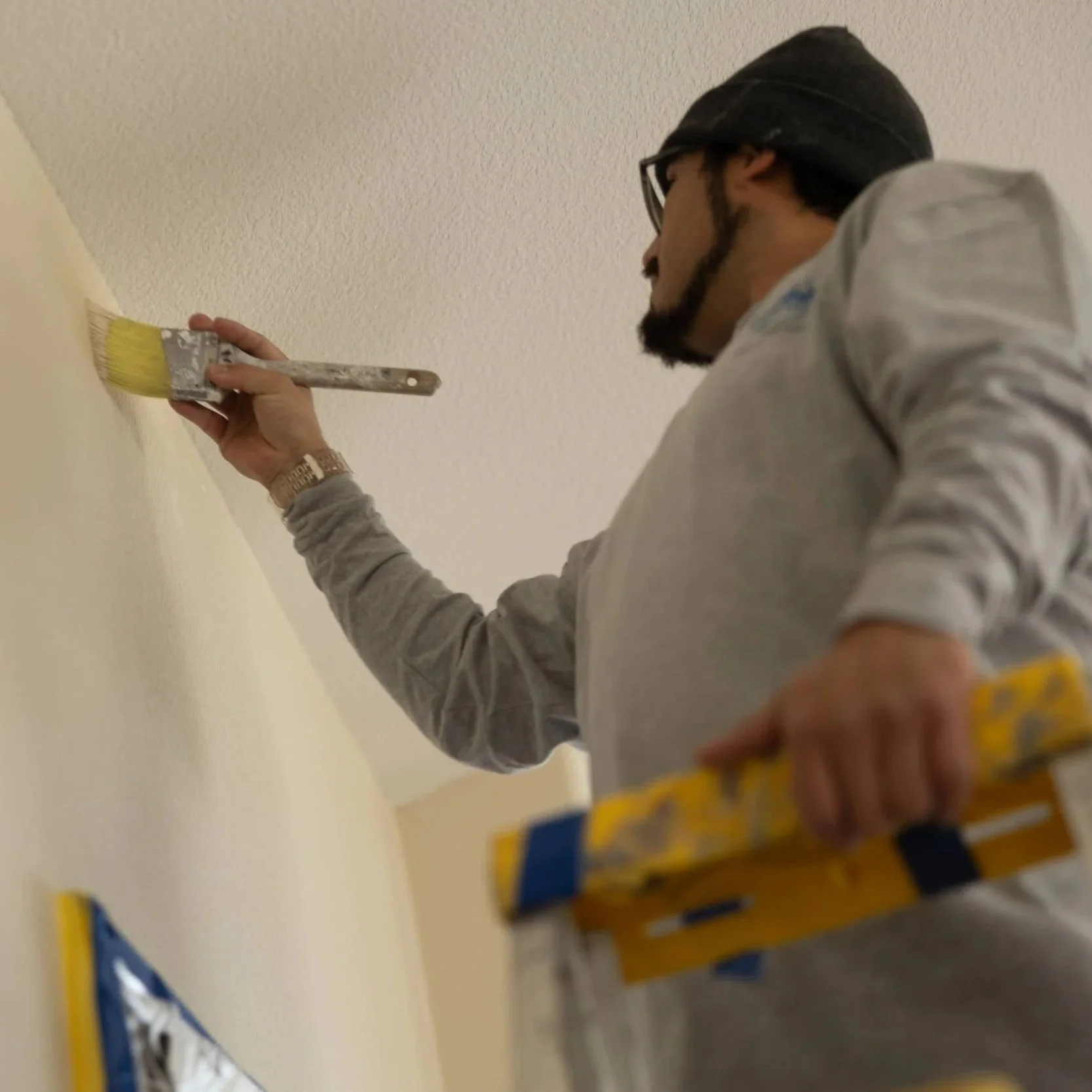
You are standing in the hallway with the morning light hitting the wall at a low angle. The paint looks fine from across the room — until you notice the shiny streak where everyone's shoulder brushes the corner on the way to the kitchen, the dull patch behind the kid's old growth chart, and a thin web of cracks above the doorway you've been ignoring for two years.
That wall isn't fine. It's two or three years past due.
Most interior paint jobs go up looking flawless and stay that way for a remarkably short stretch. Then they age in slow motion, and the homeowner doesn't notice because the change happens at the pace of grass growing. The honest answer to, "How long does interior paint last?" has less to do with the date on the can and more to do with what room it's in, what's been hitting it, and how well it was put on in the first place.
The honest room-by-room lifespan
The numbers below assume a quality water-based latex applied over walls that got real prep — sanded, patched, primed, two coats. Cut these in half for builder-grade contractor paint applied as a single coat over unprepped drywall, which is what most production homes leave behind.
| Room | Typical lifespan | First thing that usually wears out |
|---|---|---|
| Hallways and entryways | 3 – 5 years | Scuffs at shoulder height, baseboard kick marks |
| Kitchens | 5 – 7 years | Grease film near the stove, fading near windows |
| Bathrooms | 3 – 5 years | Sheen breakdown from steam, peeling near the tub line |
| Living rooms | 7 – 10 years | UV fade on south-facing walls, dust shadows behind art |
| Bedrooms (adult) | 8 – 12 years | Light fade, smudges around switches |
| Kids' rooms | 3 – 6 years | Marks, art, height-chart scars, decals pulled off |
| Dining rooms | 8 – 10 years | Chair-rail scuffs, candle soot on the ceiling |
| Closets and storage | 12 – 15 years | Mostly cosmetic; rarely revisited |
| Ceilings (flat finish) | 10 – 15 years | Yellowing in kitchens, stains around vents |
| Trim, doors, casings | 5 – 7 years | Yellowing on whites, chips at door edges |
Bathrooms and hallways are the rooms that drag the whole-house repaint cycle forward. The rest of the home would happily go ten years without seeing a brush.
Why some paint die in three years, and other paints goes twelve
Two identical-looking white walls in two different houses can have wildly different futures. The variables are mostly invisible the day the painter packs up.
The biggest one is the binder in the paint itself. Paint is pigment held together by a polymer binder — usually 100% acrylic in good interior paint, vinyl-acrylic in mid-grade, and PVA (polyvinyl acetate) in cheap contractor flat. Acrylic binders flex with temperature swings, resist scrubbing without lifting pigment, and hold their sheen for years. PVA binders break down faster, lift when scrubbed, and chalk under sunlight. A gallon of 100% acrylic interior paint runs $55 to $90. A gallon of basic PVA runs $20 to $30. The pricier gallon doesn't just look better the day it goes up — it stays that way three to four years longer.
Sheen is the second factor, and the one homeowners get backward most often. Flat paint hides imperfections beautifully and looks rich on a fresh wall, but it has the weakest scrub resistance and burnishes — develops a permanent shiny spot — anywhere a hand, shoulder, or vacuum cleaner touches it. Eggshell adds a hint of scrub resistance. Satin and semi-gloss handle scrubbing without flinching, which is why they belong in kitchens, bathrooms, hallways, and trim. Putting flat paint in a hallway is like putting carpet in a doorway. It won't survive what's coming at it.
Prep is the third, and the gap is huge. A painter who sands the gloss off old trim, scrapes flaking edges, fills nail holes with patching compound, sands them flush, and primes raw or stained spots is buying the homeowner an extra five to seven years of finish life. A painter who rolls two coats over whatever was there is buying about three. The work that happens before the first finish coat goes on is the work that decides whether the job lasts a decade or peels in a season.
The fourth factor is the wall itself. Old plaster, new drywall, previously oil-based trim, smoke-stained ceilings, and walls that have been painted four times already each behave differently under a fresh coat. Walls that had wallpaper glue residue, or were patched with the wrong compound, or were painted right over mildew — those walls are working against the new paint from day one.
| What shortens paint life most | How much time it cuts |
|---|---|
| Skipped prep — no sanding, no primer over stains | 40 – 60% off expected lifespan |
| Wrong sheen for the room — flat in a hallway | 30 – 50% off |
| Builder-grade PVA flat instead of acrylic paint | 30 – 50% off |
| Single coat instead of two | 25 – 40% off |
| South-facing wall with direct sun, no UV-resistant pigment | 20 – 30% off |
| High-humidity room with no moisture-rated paint | 30 – 50% off |
| Pets and small kids in the room daily | 20 – 40% off |
A house that stacks three of those — flat builder paint, single coat, no prep — won't see five years out of any room. A house that gets the fundamentals right will hit the upper end of every range in the lifespan table.
The visible signs that your paint is actually done
A wall that looks dirty isn't always a wall that needs paint. A wall that's chalking, burnishing, or hairline-cracking probably is. The trick is telling the two apart before spending money on the wrong fix.
Sun fade shows up first on south- and west-facing walls. The simplest test: take a picture frame or a piece of artwork off the wall and look at the ghost behind it. If the rectangle is noticeably brighter than the surrounding paint, the paint has lost color across the whole exposed area. Touch-ups won't blend, because the new patch will be richer than the faded wall. Fade is usually the cue for a full-room repaint, not a spot fix.
Burnishing is the shiny patch that develops where the wall gets touched repeatedly — light switches, the corner of a hallway, the wall next to the toilet paper holder. It's flat paint giving up. The polished spot won't go away with cleaning, because the flat finish is permanently compressed in that area. The only fix is a fresh coat, ideally in a higher sheen.
Chalking is the powdery residue that comes off on a fingertip when rubbed across the wall. It means the binder is breaking down and releasing pigment. Common in older paint jobs, in sunlit rooms, and in any room where cheap PVA flat was used. A chalking wall has to be cleaned, primed, and recoated — paint over chalk, and the new coat lifts within a year.
Hairline cracks at inside corners and along trim lines mean the paint has lost its flexibility. Houses move with temperature, humidity, and seasonal settling. Fresh acrylic stretches with that movement; aged paint cracks and reveals the wall behind it. Hairlines aren't urgent, but they're a clear signal that the paint is at the end of its working life.
Peeling near tubs, around windows, under sinks, and at exterior wall outlets means moisture is reaching the back of the paint. That's a moisture-source problem first and a paint problem second. Repainting without fixing the moisture path puts the new paint on the same failure track.
Stains that won't wipe off — crayon, marker, candle soot, water rings, smoke film — are sometimes just a primer-and-recoat issue rather than evidence the paint has aged out. A washable interior paint should clean up most marks with mild soap and a soft cloth. If repeated cleaning leaves a permanent shadow, the cleaning has lifted pigment and the wall needs paint regardless of its age.
Touch-up versus full repaint — when each is the right call
Not every aging wall needs a full repaint. Knowing when a touch-up will actually disappear and when it'll stand out like a Band-Aid saves real money.
Touch-ups blend well when the original paint can is still around, has been stored sealed and indoors, isn't more than two or three years old, and goes on a wall that hasn't faded much. They almost never blend on flat paint older than three years, on any sheen older than five, or on south-facing walls. The new paint reads as a brighter rectangle, and the eye finds it immediately under any light. A touch-up that doesn't blend looks worse than the original blemish.
A single-wall repaint is the middle path. It works when one wall is damaged or scuffed, and the rest of the room is fine. The trick is repainting the wall corner-to-corner so the seams hit at natural breaks, not feathering into the middle of a wall.
A full room repaint is the right call when more than one wall is showing age, when sheens or colors are inconsistent across the room, or when the paint is past the lifespan window in the table above. Repainting one wall in a 10-year-old room won't make the room feel new — it'll make the other three walls look more tired by contrast.
A whole-house repaint earns its cost when the home is being sold, when colors are changing for a renovation, or when the original paint has crossed the lifespan threshold in most rooms at once. Rental properties between tenants are the other reliable case, because painting empty rooms is dramatically faster and cheaper than painting around furniture and lived-in spaces.
FAQs
Yes, and almost no one does it. A soft cloth, mild dish soap, and warm water will lift most fingerprints, smudges, and scuffs without damaging quality paint. Magic-eraser-style melamine sponges remove tougher marks but also burnish flat paint, so they belong on satin and semi-gloss only. Cleaning the walls once or twice a year, especially around switches, doorframes, and the kitchen stove area, can add two to three years to the visible life of a good paint job.
Usually, yes — often twice as long. Ceilings don't get touched, scrubbed, or sun-bleached the way walls do. A flat ceiling paint that goes on over clean, primed drywall can hold up for 10 to 15 years before yellowing or staining shows. The exception is bathroom and kitchen ceilings, which collect steam, grease, and cooking moisture, and tend to need attention closer to the 7-year mark.
Trim paint lives a harder life than wall paint because it gets bumped, kicked, vacuumed against, and gripped at door handles. Quality acrylic trim paint runs 5 to 7 years before chipping and yellowing become visible. Hybrid alkyd trim paints — water-based but with the hardness of old oil — push that to 7 to 10 years. White trim yellows fastest in low-light rooms and around windows; that's a paint-chemistry issue and not something cleaning will fix.
Rentals see more wear in three years than owner-occupied homes see in ten. Furniture gets pushed against walls, kids' belongings come and go, picture hangers go in and out of fresh holes, and end-of-lease cleaning often involves scrubbing that takes pigment with it. Most landlords budget for interior repainting every two to four tenant turnovers, and using a scrubbable satin in high-traffic rooms is the single biggest extension a rental owner can buy.
For a homeowner planning to stay in the house, yes — comfortably. The price difference between a premium acrylic and a builder-grade flat across a whole-house repaint is usually $400 to $900 in extra material cost. The premium paint typically holds up four to seven years longer, which means the homeowner skips one full repaint cycle. Even at conservative whole-house repaint costs, that's $4,000 to $8,000 not spent. The math only fails when the homeowner is repainting to sell within a year, where the cheap paint is plenty.
Generally yes, and a few colors fade dramatically faster than others. Deep reds, oranges, bright yellows, and saturated greens use organic pigments that break down under UV and lose vibrancy within two to four years on sunlit walls. Deep blues and dark grays hold up better because the pigments are inorganic. Whites, off-whites, and pale neutrals fade least, which is part of why neutral palettes are still the default for repaints meant to last.
What "due for a repaint" actually looks like in practice
A house doesn't announce that it needs paint. It just slowly stops looking like the house in the photos from the day it was finished. The hallway dulls. The bathroom corners get fuzzy. The kid's room ages a year for every six months on the calendar. None of it is dramatic enough on any given day to make a homeowner reach for the phone — until a family member visits, or a real-estate agent walks through, and the rooms suddenly read as tired all at once.
The simplest test is the picture-frame trick: take a piece of art down and look at the ghost. If the rectangle behind it is brighter than the rest of the wall, the paint has aged enough that touch-ups won't hide it. From there, walk the house with the lifespan table in mind and ask which rooms have crossed the line and which still have a few years left. Most homes don't need to be repainted all at once. They need a plan that catches the kitchen and hallway now and lets the bedrooms wait another season or two.
