
How Many Coats of Paint Do You Really Need? The Two-Coat Rule
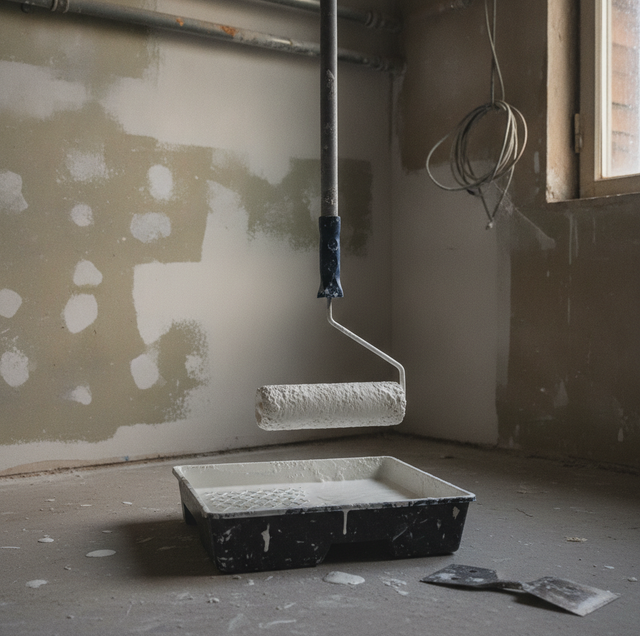
Quick Answer: For most repaints, plan on two coats of quality paint over a sound, clean surface, adding primer on bare, patched, stained, or glossy areas. Big color changes and weak-hiding colors like bright red or yellow can push you to a tinted primer plus two coats, or three. A same-color touch-up on good paint is the main case where one coat holds up.
You dip the roller, cut in the corners, and stand back to admire the wall. Then the light shifts and you see it: patchy color, thin spots where the old paint grins through, a finish that looks almost right but not quite. The question that started the whole project comes back with a vengeance. How many coats did you actually need?
The short version is that most repaints take two coats over a properly prepared surface, with primer added where the surface calls for it. But the honest, useful answer lives in the details, because "two" is a starting point, not a law. What follows is why two coats earn their place as the default, when you need more, when you might get away with one, and what really decides the whole thing.
Why a Single Coat Usually Falls Short
To understand the coat count, it helps to know what a coat of paint is actually doing. Paint is pigment and resin carried in a liquid. When you spread it, that liquid film levels out and the carrier evaporates, leaving a thin dried layer of color and binder behind. A single pass of that layer is rarely thick or even enough to do two jobs at once: hide what's underneath and build a durable, uniform skin.
Hide is the first casualty. One coat tends to sit unevenly, thinner where the roller was drying out, thicker where it was loaded, and the old color or surface texture reads through the gaps. The second coat is what closes those gaps. It fills the thin spots, evens the film across the whole wall, and deepens the color to the shade you picked off the fan deck rather than a washed-out cousin of it.
Durability is the second reason. A paint's stated performance, its scrubbability, its resistance to the everyday abuse of a hallway or kitchen, is built into a specific dried film thickness. Two coats get you to that thickness. This is not a sales gimmick. Manufacturers specify two coats precisely so the product delivers the coverage, color, and wear resistance printed on the label, and so any warranty on the coating actually applies. Skip the second coat, and you have a wall that looks thinner because it is thinner.
When You Need More Than Two, or a Primer First
Two coats assume a friendly starting point: a sound, previously painted surface in a reasonable color. Change those conditions, and the math changes with them.
A big color change: Going from a deep charcoal to a soft white, or the reverse, asks the new paint to bury a lot of contrast. The wall may need a primer to neutralize the old color, followed by two finish coats. Without that base, the old shade keeps whispering through, and you end up adding coats to chase it.
Vivid colors that hide poorly: Bright reds, oranges, and yellows are notorious. Those hues rely on pigments that are naturally weak at covering, so even over a decent base, they can look translucent after two coats. The reliable fix is a primer tinted toward the final color, followed by two coats, and sometimes a third to reach full richness. This is about pigment chemistry, not effort.
Bare or patched surfaces: New drywall, raw wood, or spackled repairs are thirsty and uneven. They drink up finish paint and flash dull in the patched areas. These need a primer first, whose job is adhesion and sealing, so the finish coats can sit evenly on a consistent base rather than sinking into any raw spots.
Stains: Water rings, smoke, marker, tannin bleed from knots in wood: ordinary paint will not reliably cover these, and it will not stop them from bleeding back through. A stain-blocking primer seals the stain so it stays buried under the finish.
Glossy or slick surfaces: Paint struggles to grip a shiny existing finish. Going over gloss usually means scuff-sanding and priming so the new coats have something to bond to; the fresh film can peel or scratch off later.
Notice the pattern. Primer and finish paint are not interchangeable. Primer handles adhesion and sealing, the groundwork. Finish coats handle color and durability, the visible result. When a surface has a groundwork problem, no number of finish coats substitutes for the primer that should have gone first.
When One Coat Can Actually Hold Up
There is a real case for a single coat, and it is narrow. If you are refreshing a wall in the same color it already is, the existing paint is sound and clean, and you are using a quality finish, one coat can restore the look. You are not asking the paint to hide a color or seal anything, only to renew a tired but intact surface.
Even here, temper expectations. A lone coat can leave faint roller lines and slightly thin patches that show up under raking light. That is why one coat lives mostly in touch-up territory rather than full-room repainting. It is the exception that proves why two is the rule.
What Quietly Decides the Count
Beyond color and surface, a handful of factors nudge the number up or down.
Paint quality: Higher-grade paints carry more and better pigment and a higher solids content, so they hide in fewer coats and lay down more evenly. A premium paint might reach full coverage, where a bargain paint still looks blotchy, which is part of why cheaper paint can cost more in the end, once you count the extra coats.
The color you're covering and the one you're applying: Dark-over-light is forgiving; light-over-dark and saturated hues are not. The gap between the old and new color is often the single biggest driver of how many coats you'll lay down.
Sheen and porosity: Flatter finishes tend to hide surface imperfections better than glossy ones, and a porous surface, like fresh drywall or bare wood, soaks up more paint than a sealed, previously painted wall, changing how much you need to build up.
Application and film thickness: How the paint goes on matters as much as how much. Rolling and spraying lay down different film thicknesses, and a stingy, over-stretched coat covers worse than a properly loaded one. In the end, it is the dried film thickness on the wall that governs coverage and durability, not the count of passes for its own sake.
One product deserves a plain word. "Paint and primer in one" is truly convenient, but the name oversells it. On an already-painted, sound wall, it can self-seal and often still wants two coats to look right. On bare, patched, stained, or glossy surfaces, it is not a substitute for a true primer. Treat it as a good paint with self-priming ability on friendly surfaces, not as a way to skip prep everywhere.
Don't Rush the Recoat
Coats also need time between them. Every paint has a recoat window on the label, often a couple of hours for latex in decent conditions, longer when it's cold or humid. That wait is not padding. It lets solvent and moisture escape the first coat so the second one bonds cleanly. Recoat too soon, and you trap that moisture, which can leave the finish soft, cause the first coat to lift, or muddy the final look. Patience between coats is part of getting the count right.
A Fair Way to Picture It
A coat of paint behaves a lot like a coat of sunscreen. One thin, hurried layer leaves streaks and missed patches, and it wears off fast. A proper second application evens everything out and gives you the protection the bottle actually promises. You wouldn't count on a single rushed swipe at the beach, and a wall is no different: the second coat is what turns "covered-ish" into covered.
A Safety Note Worth Keeping
One caution that overrides all of the above. If your home was built before 1978, the existing paint may contain lead, and sanding, scraping, or otherwise disturbing it can release hazardous dust. Before you prep old surfaces, get the paint tested and follow lead-safe practices, or bring in a certified pro. No coat count is worth a lead-dust exposure.
Frequently Asked Questions
Sometimes, in a narrow case: a self-priming, higher-solids paint going on in the same color over a sound, clean wall can occasionally cover in one pass, because it isn't being asked to hide a color or seal anything. Even then, thin spots betray themselves under raking light, the low-angle glow near a window that rakes across the surface, exaggerating every skipped patch. And a "one-coat" claim printed on the can assumes ideal color-over-color conditions, not the real wall in front of you, so treat it as a best case rather than a promise. For most repainting, one coat is the exception.
Because that's the film thickness they test against, and there are real numbers behind it. Most wall paints are formulated to go on at roughly 4 mils wet per coat, which shrinks to around 1.5 mils of actual film thickness as it dries. One coat leaves you short of the built-up thickness the paint's scrub rating and warranty assume, so two coats is simply what stacks the dried film to the durability printed on the label. Put down only one, and you don't get the full hide or the wear resistance the product was rated for.
Two situations push past two coats. The first is a big change from a dark existing color to a much lighter one, where the old shade keeps bleeding through. The second is vivid colors, bright red, orange, and yellow, especially, which get their punch from organic pigments that have weak hiding power on their own. The pro fix for those is a gray-tinted primer underneath, which gives the finish coats a neutral value to cover and can cut the number of finish coats needed, sometimes from three down to two. Without it, you end up adding coat after coat, chasing full richness.
Not on the surfaces that most need priming. On bare, patched, stained, or glossy areas, you still need a true primer for sealing and adhesion. A self-priming paint is essentially a thicker paint that can seal itself on an already-painted, sound wall, and even there, it typically still takes two coats to look right. Read it as a capable paint on friendly surfaces, not as permission to skip prep on problem ones.
Follow the recoat time on the label, often around a couple of hours for latex in good drying conditions and longer when it's cold or humid. But time is only half of it: there is a condition floor too. Most latex paints require temperatures above about 50 degrees and reasonably low humidity to cure at all, and recoating below that threshold, or too soon in any weather, traps moisture in the first coat, which softens the film and can pull it loose. Waiting for the full window in the right conditions is what protects the whole job.
It changes how you build the film more than the raw number. Spraying lays down a different, sometimes thinner and finer film than a roller, so sprayed work is often back-rolled or given the right number of passes to reach the same thickness. What actually matters is the final dried film thickness on the surface, not the number of passes, because that thickness determines whether you have full coverage and rated durability.
Book a free estimate — get the right number of coats and a finish that lasts. True Coat Painting serves Reno, Sparks, and Spanish Springs. Call (775) 227-0618.
