
How Much Does Commercial Warehouse Epoxy Flooring Cost Per Square Foot
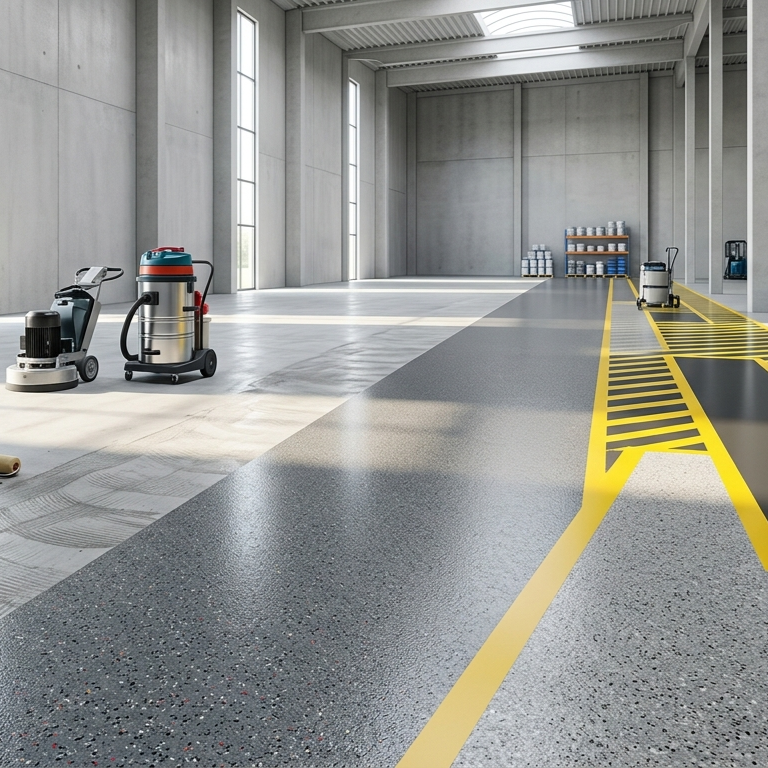
Three bids land in the inbox over a single week. Same 8,000-square-foot warehouse floor. One crew at $48,000. Another at $72,000. A third at $94,000. The cheapest contractor can be there in two weeks. The middle bid is in writing on a four-page proposal with line items. The expensive one is from the installer, the facility manager next door used three years ago and is still glad about.
A 2x spread on the same scope sounds like markup. It usually isn't. The cheap bid and the expensive bid are quoting two different floors that happen to share a square-foot count.
Once the scope behind each number is on the table, the spread stops looking arbitrary. It starts looking like a choice.
The honest per-square-foot range for warehouse epoxy in 2026
Commercial warehouse epoxy floors land between $5 and $14 per square foot installed for the systems most working buildings need. The width of that range comes from real differences in what's being installed, not from contractors picking numbers blind.
A 5,000-square-foot single-shift building running a basic high-build epoxy sits at the low end. A 40,000-square-foot distribution center running a chemical-resistant mortar system with safety striping sits at the top. Everything else sits somewhere between.
| Warehouse use case | System type | Installed cost per sq ft | Typical 10,000 sq ft total |
|---|---|---|---|
| Dry storage, light foot traffic | Standard high-build epoxy, 2 coats | $5 – $7 | $50,000 – $70,000 |
| Active warehouse, electric forklifts | High-build epoxy, primer + base + topcoat | $6 – $9 | $60,000 – $90,000 |
| Manufacturing, heavy chemical or oil exposure | Mortar epoxy or novolac system | $9 – $14 | $90,000 – $140,000 |
| Cold storage, freezer warehouse | Polyurea or polyaspartic, fast-cure | $8 – $12 | $80,000 – $120,000 |
| Distribution center needing minimal downtime | Polyaspartic fast-cure system | $7 – $11 | $70,000 – $110,000 |
These ranges assume the slab is in decent shape. A wet slab, a slab with old failed coatings, or one with deep spalling moves the price into a custom quote that ignores the table above. They also assume normal access. A second-floor warehouse, a building with no roll-up door, or a job that has to happen on a single weekend can all push the numbers higher.
What the per-square-foot rate actually buys
A warehouse epoxy floor isn't a paint job with extra steps. It's a layered system that takes a crew several days to put down, and the bid covers four cost buckets. A missing one is the single best predictor of which bids are too cheap to trust.
| Cost bucket | What it covers | Share of total bid |
|---|---|---|
| Mechanical prep | Diamond grinding or shot-blasting the slab, dust collection, edge cut-in | 20 – 30% |
| Slab repair | Crack chase and fill, spall patches, oil and grease cut-out, joint treatment | 5 – 15% |
| Coating system | Primer, pigmented base coat, broadcast flake or pigment, polyaspartic or polyurethane topcoat | 35 – 50% |
| Labor and cure | Crew time across multiple days, cut-in by hand, between-coat sanding, knockdown, cleanup | 20 – 30% |
Mechanical prep alone runs $1 to $2.50 per square foot of the bid. It's the single most important line item in the document. An installer who acid-etches with a homeowner kit instead of grinding the slab is saving a day of labor and a piece of rental equipment. The coating that goes down on top of that prep is sitting on the surface of the concrete, not bonded into it. It peels at the corners first, then at the forklift turns, then in sheets.
The coating system itself is where the visible product differences live. A two-coat job rolled out fast is cheap. A primer with broadcast flake to refusal and a polyaspartic topcoat at twenty wet mils costs more and outlasts the cheap floor by three to one. The fourth bucket — labor and cure — is the one that can't be shortcut. Each layer needs hours to cross-link before the next one goes down, and that calendar drives the crew's day count.
The four levers that move the per-square-foot price
Real warehouse bids land at different points on that range for predictable reasons. Four variables do most of the work.
System type sets the floor. A two-coat standard epoxy starts the bid around $5 per square foot. A primer-base-flake-topcoat stack lands closer to $8. A mortar epoxy, or novolac chemical-resistant system, pushes past $10. Polyaspartic and polyurea fast-cure systems are similar in install cost to mid-tier epoxy systems but charge a premium for speed — the same way a same-day shipping option costs more than ground freight for an otherwise identical package.
Square footage moves the per-square-foot price downward as the project gets bigger. Mobilization, grinder transport, dust collection, crew lodging if it's an out-of-town job, and project management overhead are fixed costs spread across the slab. A 3,000-square-foot building can carry a $1.50 per-square-foot mobilization premium that a 30,000-square-foot building absorbs into the rate. Most installers post a minimum project floor — often $4,000 to $6,000 — below which small jobs become unprofitable.
Slab condition is the wild card that quietly doubles bids. A clean, dry, twenty-year-old slab with light cracking is an easy job for any crew. A 1985 slab with three previous coatings, ground-in forklift oil, and a moisture vapor reading of 5 pounds per thousand square feet per 24 hours is a different job entirely. Old coatings have to come off — that's a day of extra grinding plus a moisture-mitigating primer that can triple the primer cost. Active moisture from below the slab kills any standard epoxy. A floor laid over a wet slab will lift in sheets within a year.
Site conditions add line items that aren't obvious from the floor plan. A warehouse with no electrical for the grinder needs a generator rental. A building with sensitive equipment that can't be exposed to grinding dust needs containment walls. A facility that has to stay partially operational adds a phased-install premium for the crew to mobilize twice. A weekend-only schedule adds overtime to the labor line.
Why the cheapest bid almost always wins twice
The bid at the bottom of the spread is usually cheaper because it's missing line items, not because the crew runs lean. Three items show up missing most often.
Diamond grinding gets swapped for an acid etch. Acid etching opens the top fraction of a millimeter of the surface. Grinding opens the top sixteenth of an inch and pulls off everything contaminated. Coatings stuck to acid-etched concrete fail at the bond line within two to four years, sometimes inside the warranty window.
Slab repair gets ignored. Cracks left untreated keep moving as the slab expands and contracts with temperature. The coating bridges the crack at installation and tears at the same line within months. Spalled areas get coated over instead of patched, and the next forklift turn chips a quarter-sized piece of coating loose along with the bad concrete.
The topcoat layer gets skipped or downgraded. A pigmented epoxy without a clear polyaspartic topcoat looks fine for six months. Then the pigment starts to wear in the high-traffic lanes, and the floor shows tire scuff and ground-in dirt that doesn't clean off. The topcoat is the layer that takes the abuse — without it, the colored base coat is doing both jobs at once and loses.
A facility that buys the cheapest bid usually pays again within three to five years. Either the floor is re-coated over a failing surface, which makes the eventual failure worse, or it's ground off and replaced — which costs more than installing the right floor the first time. Most warehouse owners who've been through one bad coating call back the second time and ask for the bid that scared them off the first round.
How the total project cost scales with warehouse size
Per-square-foot rates do most of the work in a quote, but the total project number is what hits the budget line. A few benchmarks for what 2026 commercial warehouse bids actually look like, assuming decent slab condition and a standard high-build epoxy with flake broadcast and polyaspartic topcoat:
A 3,000-square-foot single-bay warehouse runs $24,000 to $33,000. The per-square-foot rate is higher than the larger jobs because mobilization spreads across less area.
A 7,500-square-foot light-industrial space runs $48,000 to $68,000. This is the bracket where economies of scale start to show up and per-square-foot pricing drops.
A 15,000-square-foot distribution warehouse runs $90,000 to $135,000. Multiple crew days, a phased install option, and bigger material orders show up in the bid breakdown.
A 30,000-square-foot manufacturing floor runs $180,000 to $300,000, depending on system type. At this size, novolac or mortar epoxy systems for chemical resistance become viable budget options because the per-square-foot premium spreads across a large floor.
A 50,000-square-foot fulfillment center runs $325,000 to $550,000. Polyaspartic fast-cure systems show up more often in this bracket because the cost of every closure day is high enough to justify the system upgrade.
Add 10 to 15 percent to any of these for safety striping, forklift lane markings, color-coded zone separations, or floor logos. Add another 5 to 10 percent for jobs that have to happen on a weekend or a single shutdown window.
FAQs
For comparable systems, commercial pricing per square foot usually runs slightly below residential — sometimes 10 to 20 percent lower. The reason is scale. Mobilization, grinder setup, and crew startup spread across thousands of square feet instead of a 500-square-foot garage. The flip side is that warehouse systems are often heavier-duty than a residential floor, which adds cost back through thicker coatings and stronger topcoats.
Most reputable installers set a project floor around $4,000 to $6,000. Below that, mobilization and crew time eat the margin. For a $7-per-square-foot job, that translates to roughly 600 to 850 square feet as the practical minimum. Small storage rooms attached to a larger warehouse project usually get rolled into the main bid without a separate minimum charge.
Yes, but the relationship isn't linear. A 30-mil floor compared to a 15-mil floor costs roughly 30 to 40 percent more in material because more resin and pigment have to be ordered. Labor stays close to the same because the crew is rolling more passes over the same square footage. For a heavy-duty warehouse, the thicker floor usually pays for itself in lifespan.
Removing a failed coating runs $2 to $5 per square foot on top of the new floor install. The old coating has to be shot-blasted off down to clean concrete, the slab repaired, and the new system installed over fresh prep. A 10,000-square-foot floor that has to be replaced before a new system goes down can land at $90,000 to $140,000 total — which is why getting the first install right matters.
Striping adds $1.50 to $4 per linear foot of line, depending on width, color count, and whether it's laid in thermoplastic or tinted epoxy. A typical 10,000-square-foot warehouse with full lane markings, pedestrian walkways, and zone color-coding adds $3,000 to $8,000 to the base bid. It's almost always cheaper to include striping in the original install than to add it later as a second mobilization.
The resin itself costs more per gallon, and the working time after mixing is short — often under 30 minutes — which forces crews to move faster and work in smaller batches. Both factors raise the labor and material bills. The trade-off is install speed. A polyaspartic warehouse floor reopens to forklift traffic in 24 to 48 hours instead of 5 to 7 days, which can pay for the system upgrade in any building where closure days have real revenue cost.
Reading a warehouse epoxy bid honestly
A warehouse epoxy quote is one of the few line-item documents where the cheapest number is reliably the most expensive choice three years later. The bid that walks through prep, repair, coating layers, and labor with real numbers next to each one is the bid that tells the truth about what the floor will cost. The bid that lists "epoxy floor coating, $X per square foot" with no breakdown is the bid that's hoping nobody asks questions until the deposit clears.
The per-square-foot rate is shorthand. The scope is the contract.
