
How Often Should Rental Property Decks Be Restained
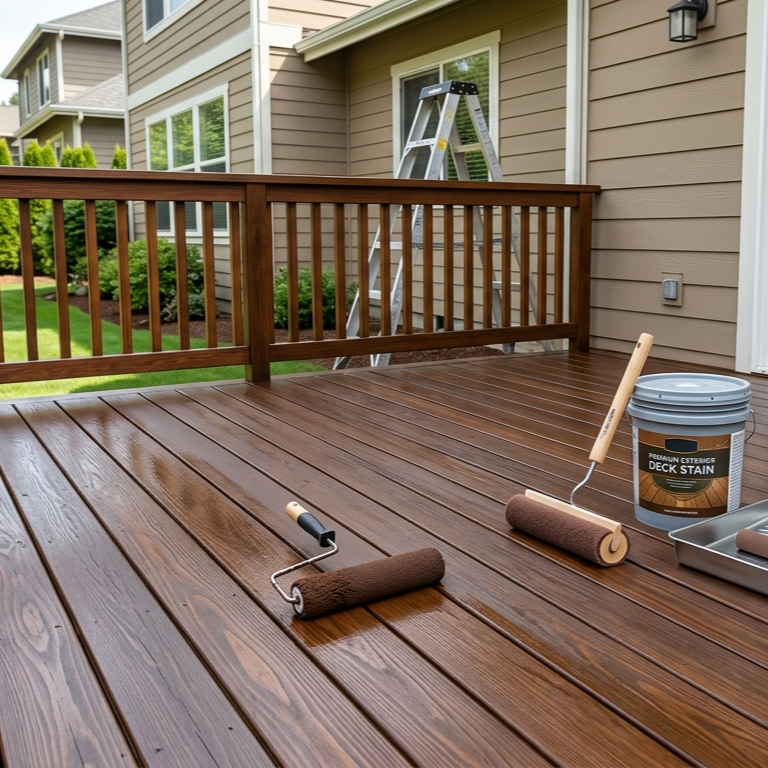
The tenant handed over the keys yesterday, and you're walking the property before posting the listing. The deck looked fine in the move-in photos two years ago. Today the boards near the slider are gray, the rail caps feel chalky under your hand, and there's a dark ring where a grill sat. A planter left a permanent shadow on the corner board. You poke a thumbnail into the spot under the railing post and the wood gives a little.
This is the moment landlords realize the deck is on a different clock than they thought. A deck under a single owner who babies it can stretch a solid stain to year six. A deck under back-to-back renters running grills, dragging furniture, leaving wet bath towels on the boards, and never reporting the puddle that pools by the downspout — that deck is on a two-to-three-year clock, regardless of what the can promised.
The short answer is that rental property decks should be restained every two to three years, with an inspection at every turnover and a written condition note at every lease signing. The longer answer is about the rhythm — when in the lease cycle to do it, when to wait, and when to do something other than restain.
The frequency by stain type, rental version
The lifespan ranges below assume normal owner-occupied use. The rental column applies the friction multiplier — the extra UV exposure from a deck that never gets covered when it's not in use, the foot traffic that runs lanes instead of a spread pattern, the spilled drinks and grill grease that never get wiped within the first hour, and the small leaks and pooling that never get reported.
| Stain type | Owner-occupied lifespan | Rental-occupied lifespan | What rentals do to it |
|---|---|---|---|
| Clear sealer | 1 – 2 years | 1 year, sometimes less | UV plus tenant traffic strips it inside one summer |
| Transparent stain | 2 – 3 years | 1 – 2 years | Pigment too light to fight foot lanes |
| Semi-transparent | 3 – 4 years | 2 – 3 years | Best rental value if you're committed to the cycle |
| Semi-solid | 4 – 6 years | 3 – 4 years | Hides minor abuse; forgives spills |
| Solid stain | 5 – 7 years | 3 – 5 years | Longest rental option; covers patch repairs cleanly |
| Deck paint | 3 – 6 years | 2 – 3 years | Peels fast at edges; almost never the right rental pick |
A rental that turns over every twelve to eighteen months will run a different rhythm than a long-term rental where the same tenant stays six years. The first benefits from doing the restain at the vacancy gap. The second has to be willing to schedule the work around an in-place tenant — usually a long weekend in late spring or early fall, with the tenant given two weeks' notice and access to a side or back entrance during the dry time.
Why rental decks wear faster than the manufacturer's number
The packaging on a can of stain assumes a homeowner who notices the first chalky board and cleans the deck before mildew sets in. The same product on a rental deck runs into four conditions that compress the lifespan in predictable ways.
Foot traffic concentrates without anyone noticing. A renter walks the same path from the slider to the patio chairs to the grill, three times a day, every day. The owner who'd shift the furniture to spread the wear isn't living there. The path through the middle of the deck wears through the finish six to twelve months before the rest.
Spills sit longer. Coffee, soda, wine, grill grease, citronella oil, sunscreen. An owner usually wipes them within the hour. A renter often doesn't, especially on a deck that gets used in the evening and isn't seen until the next morning. Each spill that sits past the dew point binds to the finish from the top and accelerates the breakdown directly under the spot.
Drainage problems go unreported. The board that pools after every rain because the joist underneath has sagged half an inch — an owner would notice that within a season and fix it. A renter may not realize it's a problem, or assume the landlord knows. Standing water eats the stain from below and lets rot start at the joist contact while the surface still looks intact.
Furniture damage is a category. Planters that hold moisture against the boards, grill drip pans that overflow, propane tanks that leave a permanent ring, plastic chair feet that scratch through the stain to bare wood, and holiday lights stapled into the railing. None of these is catastrophic on its own. Stacked across two or three tenants, they turn a five-year cycle into a three-year one.
The turnover-window restain — when it actually makes sense
The cleanest time to restain a rental deck is during the vacancy between tenants. The deck is empty of furniture, no one's tracking through wet stain, and the cost of the work doesn't compete with daily rent because nobody is paying it. Most landlords use this window for interior repaints, carpet cleaning, and appliance servicing — adding the deck to that list is the lowest-friction way to keep the cycle running.
The window has to be at least four days of dry weather for a standard clean-and-recoat job. A wash on day one, twenty-four hours to dry, light sanding on day two, two coats of stain on day three with twenty-four to forty-eight hours between coats, and one more day before furniture goes back. That's four to five days of vacancy at minimum. If the deck needs a strip first, double it.
The turnover window also gives you a chance to address the small structural items that always get found during the prep — the loose rail post, the cupped board that needs replacing, the joist hanger that pulled out. These are the items that turn a $700 restain into a $1,400 restain-plus-carpentry job, but every one of them was going to come up eventually, and addressing them during vacancy means no tenant emails about a wobbly railing six weeks into the next lease.
If the deck is past the easy restain — fuzzy boards, peeling, cupped or split planks, visible rot at the connections — the turnover window is where you make the call between a full strip-and-restain versus replacement of damaged sections. Catching it at turnover is much cheaper than catching it after a tenant complaint or, worse, after a tenant injury.
When mid-tenancy is the right call
Sometimes the timing doesn't line up. The lease runs four years, the deck needs restaining at year two and a half, and waiting until the next turnover means another eighteen months on an unsealed deck. That's the case where mid-tenancy restain makes sense.
The two factors that matter most for a mid-tenancy job are notice and dry time. Two weeks of written notice gives the tenant time to move grills and furniture and to plan around the work. Dry time on the stain — usually a long weekend with three to four consecutive rainless days — keeps the disruption to a single window instead of stretched across two weekends.
The work itself is the same as a vacancy restain, but the staging is different. The crew typically blocks the deck off during the work and gives the tenant access through a side door or to a clear path around the side of the house. Cost is roughly the same as a vacancy job, sometimes ten to fifteen percent higher because of the extra coordination.
The wrong call is letting a tenant DIY the restain in exchange for a rent credit. Tenants almost never do the prep that a deck needs — the pressure wash, the dry time, the sanding, the two-coat application within the recoat window. A self-applied stain over an under-prepped deck will fail inside a year and the next restain will have to strip whatever the tenant put down.
When you're past restain and into rebuild
A few signals at turnover mean the next step isn't a recoat. Spongy boards underfoot. Visible rot at the posts or at the band joist where it meets the house. Cupped boards that no longer sit flat. Splits longer than six inches in load-bearing boards. Loose railings that move more than half an inch when you push them. A wobbly stair stringer. Any of these mean the boards (or the framing under them) need attention before anything goes on top.
In some cases that's a board-and-rail replacement followed by a full stain on the whole deck. In other cases it's a full rebuild of the deck above the joists, or a teardown back to the ledger. The threshold most painters use is roughly thirty percent of the deck surface — once a third or more of the boards or rails are compromised, replacement of the surface is usually more economical than spot-replacing while trying to match the existing finish.
The other signal is age plus stain history. A deck that's twenty years old and has been restained three times is fighting age in the wood itself, not just in the finish. Each restain is sticking to a thinner wood layer than the one before it. At that point the question shifts from "what stain do we use" to "is the wood still worth coating."
FAQs
No. Deck restaining is normal wear-and-tear maintenance, not damage. Charging a tenant's deposit for routine restain is the kind of move that gets challenged and lost. The deposit can cover specific damage — cigarette burns through the boards, a planter ring that took out a section of finish, deep gouges from furniture dragged across without pads — but the general restain cycle is the landlord's cost of owning a deck.
Yes, but the durability tier matters more on a rental. Most landlords get a longer payback from semi-solid or solid stain than from transparent, even if transparent looks better in the listing photos. The extra two to three years between restains on a rental adds up faster than the appearance benefit on a property the owner doesn't see daily.
The cheapest cycle that actually protects the deck is one full restain every two to three years with a clean-only year in between. The clean-only year is a pressure wash and a deck cleaner application that takes a half day and runs a fraction of a full restain. Skipping the clean year and doing a restain every four to five years instead costs more total because the prep is heavier each time.
Usually yes, if the deck is past the water-test stage. A fresh stain on a clean deck reads in photos and in person as a maintained property. A weathered, gray, fuzzy deck reads as deferred maintenance and can knock the price down by more than the cost of the restain. A buyer's inspector who finds rot from a failed finish will write it up and the negotiation goes the wrong direction.
Sun is the single biggest variable. A south- or west-facing deck with no overhead cover takes about twice the UV hours per year of a north-facing or shaded deck. Cut a year off the rental cycle for full sun exposure, add a year for substantial shade. A deck under a pergola or with a tree dropping shade for half the day can hold a stain noticeably longer than the same product on a fully exposed deck next door.
A short addendum naming what tenants can and can't put on the deck — no grills closer than two feet from the rail, no plastic feet that scratch, planters raised on saucers, no permanent fixtures stapled or screwed in — protects the deck more than any single product choice. It also makes the conversation at turnover easier when a planter ring or grill scorch comes up. Reasonable expectations in writing beat enforcement after the fact every time.
The rhythm that actually works
A rental deck doesn't need a perfect deck. It needs a deck that holds its protection between turnovers, doesn't surprise the next tenant with a soft board, and doesn't make the maintenance budget jump every five years because the stain cycle was skipped twice and the wood paid for it.
The rhythm that holds up across most rentals is this: pick a semi-solid or solid stain at the next restain, run a two-to-three-year cycle keyed to your turnover pattern, do an inspection at every turnover regardless of whether a full restain is due, and budget a clean-and-rinse in the off-years. That's it. The rental decks that get to year fifteen without major board replacement are the ones running that rhythm. The rental decks that need full rebuilds at year eight are the ones that got skipped twice in a row.
