
Tenant Improvement Painting: What a New Occupant Inherits
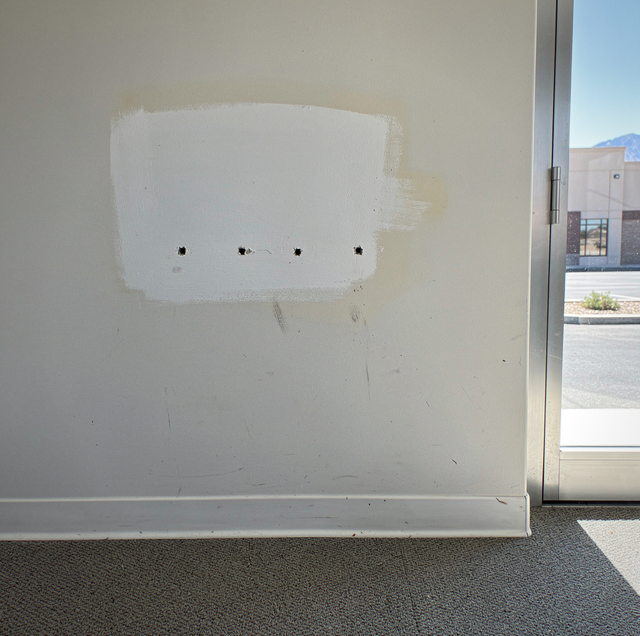
A lease is signed, the keys change hands, and the suite still wears the last occupant's colors. On the back wall there is a rectangle of unfaded paint where a sign hung for six years, and a row of anchor holes where the shelving standards were bolted through the drywall. All of it is now your surface.
Tenant improvement painting is the work of turning that inherited surface into a space that carries your business, and it does not begin with a fresh sheet of drywall. It runs on a schedule when other trades are working inside, and what you can put on the wall is limited by what the previous coating can support. Your first constraint is a wall, not a color card.
What the Last Tenant Left on the Walls
The condition of an existing commercial finish is rarely uniform across your suite. A conference room repainted two years into a tenancy sits beside a corridor washed weekly since the building opened, and a stockroom nobody ever touched. Vinyl graphics leave a cured adhesive film. Anchor holes leave crumbling paper edges. The unfaded rectangle behind a removed sign indicates the age of the coat around it, and a demolished partition leaves a band of fresh joint compound running floor-to-ceiling across three older coats.
Surface preparation consists of three steps: remove all surface contamination by washing with an appropriate cleaner, rinse thoroughly, and let it dry; scrape and sand existing peeled or checked paint to a sound surface; sand glossy surfaces to a dull finish. The consequence follows directly: any surface preparation short of total removal of the old coating can shorten the service life of the system, on a wall you did not paint, over a substrate whose history you cannot open and read.
That sentence carries into a build-out further than any color chart. A skim coat over a failing layer inherits the failure. The question a painter puts to an occupant is not which color goes on, but how much of what is there comes off, and who is taking it off.
Whose Job Is the Wall Before the First Coat?
Prep on your fit-out is split across trades before anyone opens a can. Demolition removes the partitions; a drywall crew closes the openings and finishes the joints; an electrician cuts in the new device boxes and data plates; and a signage contractor pulls the letters off the exterior and the lobby wall. Each of those leaves a surface somebody has to make paintable, and the painter is usually last in line.
The lease and the work letter divide those items between the landlord and the incoming occupant, and the parties put the division in writing before the schedule is built. What a particular lease requires is a matter for the people who wrote it. What matters on site is narrower: every square foot of wall has a name attached to it before the first coat, or you lose the day the crew arrives.
One item never belongs to you. Scraping, sanding, or removing old paint may release lead dust, and an older building's coating is a potential source. A painting crew handles suspect material with containment, and a certified lead abatement professional handles it where testing calls for one.
Sequencing Paint Into a Build-Out Schedule
Paint appears twice in a build-out schedule, not once. Primer and the first finish coat go on while your space is still empty, after the drywall is sanded and before flooring, casework, and fixtures arrive. The second is the touch-up and final coat, once the trades who scuff walls have finished carrying material through the door. Reversing that order adds a return trip, because a wall finished before the millwork lands gets marked by it, and a base cabinet scribed to a wall gets its caulk line after the wall is painted.
Ceilings and grid work run ahead of walls. An open ceiling that will be sprayed dark takes its coating before the grid, the diffusers, and the sprinkler heads go in, because masking all of that afterward takes longer than the coating itself. A dropped ceiling gets its tile last, which leaves the wall above your grid line reachable only during a narrow window. A painter who misses that window works around finished tile rather than an open plenum.
Phasing exists for this reason, and large projects can be completed in stages to fit tenant use and the schedule. High-traffic commercial interiors are commonly repainted every three to five years, depending on use. A corridor coating you specify during a fit-out is chosen against that interval, not against one move-in day.
Painting a Brand
Color in your fit-out is chosen for a brand rather than a room. A palette out of a logo file must survive fluorescent troffers, storefront glass on a north wall, and a corridor with no daylight at all, and the same value looks different under each. The purpose is simple to state: a new color scheme helps align a space with updated branding or operational changes.
Sheen carries as much of a brand as hue does, and must survive the traffic you get. A durable, professional-quality interior vinyl acrylic finish in a low-gloss eggshell works well where a surface needs to hold up to scrubbing without reading as glossy. A reception wall and a stockroom rarely want the same product.
A Cold Shell and the Recoat Clock
A shell that has not been conditioned yet is a different job from an occupied office. Heat is often commissioned late in your build-out, and paint has a floor under it: apply at temperatures above 50°F, with both air and surface temperatures held to that minimum.
The recoat clock moves with your room as well. A typical interior latex dries to the touch in about an hour and is ready to recoat in about four hours at 77 degrees Fahrenheit and 50 percent relative humidity; drying and recoat times are temperature-, humidity-, and film-thickness-dependent. A cold slab and a cold wall stretch those hours, and a crew that planned two coats into one day loses the second one.
None of that gets fixed with a heater aimed at a wall on the morning you coat it. Surface temperature and air temperature both count, and masonry and slab hold cold long after the air has come up. Get temporary heat running days ahead of the paint date, instead of hours ahead, keeping the sequence intact.
Frequently Asked Questions
Yes, and it rarely leaves with the sign. Cured adhesive and the shadow of a channel letter both stay behind, and paint over them telegraphs the outline through your new color. Your painter washes your field first and treats the residue as its own step.
Some of it can. Primer and the first coat tolerate company; the final coat does not, because everything carried through the door afterward lands on it. If your build-out is running tight, the coat worth protecting is the last one, and your schedule is written backward from that day.
A rebrand supplies values, not a wall specification. Colors approved for print instead of for a painted field can sit heavy across sixty feet of a corridor, and a broad accent may need a tinted primer under it. Your painter maps your palette onto the rooms you actually have before anything is ordered.
It stays wet longer than the schedule assumes, and below that floor it may never form a sound film. That floor sits at 50 degrees Fahrenheit for air and surface alike. If your space is still unconditioned in cold weather, temporary heat becomes part of your paint scope and not an afterthought.
Usually, and the reason is hiding, not adhesion. A saturated red or a deep charcoal will bleed through two coats of a light finish, and a third coat takes a day you did not plan for. A primer tinted toward your new color closes that gap in one pass and gives your topcoat a uniform substrate over patching and old paint.
Later than you would guess. Painted surfaces become safe to wash after about two weeks, and high humidity and cool temperatures stretch dry, recoat, and service times even longer. A film dry to the touch in an hour is hardening for longer than that, and a suite handed over Friday and opened Monday has walls in that window. A spill in that fortnight gets blotted, not scrubbed. Give your walls their two weeks before anyone puts a cleaning cloth to them.
Get a walk-through on the calendar before the build-out schedule is locked — especially if the suite still carries the last occupant's brand on its walls. True Coat Painting serves Reno, Sparks, and Spanish Springs. Call (775) 227-0618.
