
Why Is My Interior Paint Peeling on Bathroom Walls
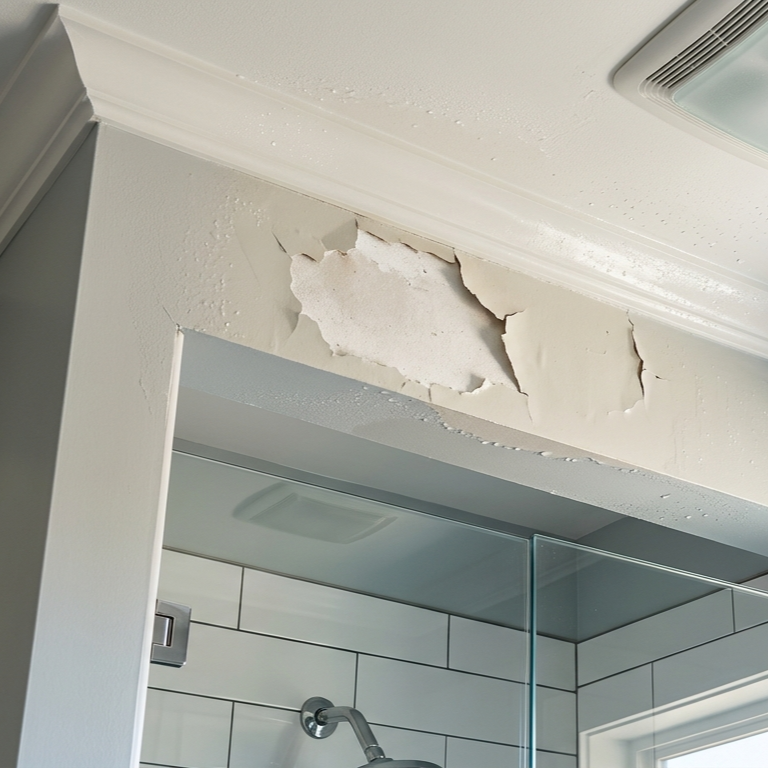
You step out of the shower, wipe the fog off the mirror, and there it is again. A piece of paint the size of a quarter has lifted off the ceiling above the curtain rod. Last week it was a small bubble. The week before that, nothing you'd have noticed. The exhaust fan was running both times. The paint is less than four years old.
Bathrooms eat paint faster than any other room in a house. It isn't your fault, and it usually isn't bad luck. There's a physical reason peeling shows up on bathroom walls and ceilings years before it shows up anywhere else — and once you can see what's happening behind the paint film, you can tell the difference between a problem that needs a real repair and one that just needs better ventilation.
Bathroom paint doesn't fail the way the rest of the house does
In a living room or a hallway, interior paint usually lasts 8 to 12 years before it shows wear. It scuffs at chair-rail height, gets smudged near light switches, fades a bit on the wall behind the south window. The film itself stays bonded to the drywall.
In a bathroom, the film is fighting a different war. Every shower pumps warm, moisture-loaded air into the room — sometimes 90% relative humidity for thirty minutes at a stretch. That air hits whatever surface in the room is coolest. Outside walls. Ceiling drywall above a cool attic. The strip of wall directly above the showerhead. Vapor condenses there into a microscopic film of water, the way it does on a cold glass of iced tea on a hot porch.
Paint is not a perfect waterproof skin. Even good interior paint has billions of pores small enough to let vapor pass through but not liquid water. Vapor passes through the film. Hits the cooler drywall on the back side. Condenses behind the paint. Then nothing dries it out — the back side of the paint film has no airflow.
Over the next dozen showers, that condensed water softens the bond between paint and primer, or between primer and drywall paper, depending on what was put down originally. The film stops gripping. A small bubble shows up first. Then a crack. Then a curl. Then a sheet.
That's the mechanism. It explains nearly every peeling pattern you'll see in a bathroom.
| What you see | What's behind it | How urgent it is |
|---|---|---|
| Tiny pinhole bubbles in the paint above the shower | Vapor pushing through the film as it warms after a shower | Cosmetic — fan upgrade and ventilation usually stop it |
| A sheet of paint lifting along the ceiling above the tub | Condensation behind the film; paint grade not rated for wet rooms | Repaint the section soon; vapor's been trapped for months |
| Paint peeling around the window or above the toilet tank | Cold spot at an uninsulated outside wall — condensation cycle | Repaint after addressing the cold surface |
| Crackling around the baseboard or where the wall meets the shower surround | Liquid water tracking down behind the wall from a leak or failed caulk | Stop here — check the plumbing and caulk lines before any repaint |
| A brown or yellow ring under peeling paint | Old water stain — leak from above or a slow drip the framing has soaked up | Find the leak first; paint is the messenger, not the problem |
A good rule of thumb when reading peeling patterns: paint that's failing because of vapor and condensation tends to lift in patches with soft, curled edges. Paint that's failing because of liquid water tracking behind the wall tends to crack first, then bubble, and the wall behind it feels soft or spongy when pressed. The two patterns get treated differently. Repainting over a soft wall is a waste of paint.
Why the ceiling above the shower goes first
Look up next time you brush your teeth. The ceiling above the tub is the coldest large surface in most bathrooms — it sits under the attic, which is the part of the house with the least insulation in many builds, and it doesn't get the warm air rising into it the way the side walls do.
When the shower runs, warm humid air rises. The first surface it touches that's much colder than the air itself is the ceiling above the shower. Condensation forms there before it forms anywhere else. The mirror fogs at the same time, but the mirror is impermeable — vapor sits on the surface and evaporates after the shower ends. The ceiling drywall absorbs it.
Repeat that twice a day for two years and the back side of the paint film over the shower has been wet for months in aggregate. The drywall paper underneath softens. Adhesion fails. The film lifts in a sheet, usually starting at the corner where the ceiling meets the outside wall — the coldest point of the coldest surface.
It's the same reason a windshield fogs from the top down on a cold morning. Cold surface, warm air, vapor going where the temperature gradient pulls it.
The four things behind almost every bathroom peel
Not every peeling bathroom has all four of these going on. Most have one or two. Treating only the visible peel without sorting out which cause is in play is what makes the same wall peel a second time within a year.
Inadequate ventilation is the most common cause and the easiest to verify. If the exhaust fan doesn't move enough air to clear the mirror within about ten minutes of a shower ending, it isn't moving enough air to clear the vapor that's already condensed behind the paint. A weak or undersized fan, a fan that vents into the attic instead of out through the roof, or a fan that doesn't run long enough after the shower all leave moisture in the room long after the visible steam disappears. Every minute of extra dwell time is a minute the back side of the paint stays wet.
Wrong paint grade is the second cause, and it's the one that catches most people off guard. Standard interior wall paint is formulated for dry rooms. It's vapor-permeable by design, because most walls in a house actually need to breathe a little to let small amounts of trapped moisture escape. In a bathroom, that permeability becomes a liability. The vapor that passes through gets trapped against cold drywall. Bathroom-grade paint — sometimes called bathroom-and-kitchen paint, or sold as a mildew-resistant satin or semi-gloss — uses a tighter resin film and a different binder system that holds up to moisture cycles much better. Plain, flat, or eggshell wall paint in a heavily used shower will peel.
Skipped prep is the third. Bathrooms get repainted often, and every repaint stacks a new film on top of whatever was there before. If the previous coat was glossy and wasn't sanded or deglossed before the new paint went down, the new coat is gripping a slick surface. If the wall had body oils, hair-product residue, or soap film on it when the painter rolled, the bond is already compromised. New paint can look fine for six months and then lift in sheets the first humid summer.
Hidden water is the fourth and the one that gets blamed on humidity when it isn't the real cause. A pinhole leak in a supply line behind the shower wall. A failed caulk bead at the tub-to-tile joint that's been wicking water into the drywall edge for two years. A slow drip from the toilet tank gasket onto the flooring and up through the baseboard. None of those problems show up on the visible side of the wall until the paint starts cracking. A bigger fan and a better paint aren't going to fix it — the source has to be found first.
When touch-up paint just delays the next failure
The instinct after spotting a peel is to scrape the loose paint off, dab a little spackle on the spot, sand it, and roll on a fresh coat. Sometimes that works for a year. Often it lifts again within months. The reason is mechanical.
A bathroom peel almost always happens because the bond between the paint and what's underneath has broken across an area larger than the visible damage. The visible flake is where the film finally gave up. The surrounding paint that still looks fine is often only loosely attached — adhesion already compromised, just not yet visibly lifted. Painting over a fresh patch without dealing with the surrounding area means the new paint bonds to old paint that itself is barely hanging on. The film fails again at the edge of the patch, not in the middle.
A real fix scrapes back to fully sound paint, sands the surrounding area, primes the bare drywall with a stain-blocking primer designed for wet rooms, and recoats with a bathroom-rated paint. On a ceiling that's been peeling for a while, the cleaner move is often to strip the whole ceiling and start fresh — the patchwork approach leaves a visible ridge where new film meets old.
Before any of that paint goes back up, the ventilation gets corrected and any plumbing or caulk source gets repaired. Otherwise the new coat is doing the same job as the old coat under the same conditions, and the same thing will happen again.
FAQs
A bathroom painted with the right paint grade, decent prep, and adequate ventilation should hold up 5 to 8 years before any peeling shows. With premium bathroom-rated paint and a strong exhaust fan, 10 years is realistic. If a bathroom paint job is peeling within the first two years, the cause is almost always wrong paint grade, skipped prep, or a moisture source that nobody addressed before painting.
It helps a lot, but it usually isn't enough by itself if the existing paint has already lost adhesion. A bigger fan keeps new paint from failing the same way, and it slows down the spread of the current problem. The lifted paint still has to come off and be replaced — the bond underneath doesn't repair itself once it's broken. A fan upgrade plus a proper recoat is the combination that holds.
Sometimes. Vapor that condenses behind a paint film and stays trapped for months can absolutely feed mold growth, especially on drywall paper. A small peeling area with no discoloration is usually just adhesion failure. Brown or black spots under the paint, a musty smell when you scrape the loose paint off, or soft spongy drywall behind it points to mold that's been growing in the wall cavity. That changes the repair — the drywall has to come out, not just the paint.
Painting over actively peeling paint locks in the failure and adds weight on top of an already weak bond. The new coat tends to peel at the boundary of the patch within a year. Scraping back to sound material is what makes a repair last. It feels like extra work, but it's the difference between a 12-month touch-up and a 5-year repair.
Yes, and the difference matters more than most people realize. Bathroom-rated paint uses a tighter resin film, includes mildewcide in the formula, and is engineered to handle repeated humidity cycles without losing adhesion. Regular interior paint in a heavily used bathroom is fighting conditions it wasn't designed for. The price difference per gallon is small. The difference in how long the job lasts is years.
It's harder. Wallpaper that's been hanging in a humid bathroom often has loose seams or hidden adhesive failure underneath — paint over that and the wallpaper detaches with the paint. Heavily textured walls hold more vapor in the texture peaks and tend to peel earlier than smooth walls. The cleanest result in a wet room comes from stripping wallpaper, skim-coating the wall flat, and repainting with a bathroom-rated product. Half-measures here tend to fail within a season.
The peel is the messenger
The thing to remember about peeling bathroom paint is that the visible damage is the last step of a process that started months or years earlier. Vapor was moving through the film and condensing on the back side long before a flake ever lifted. The bond was failing in silence the whole time.
That means the fix is rarely just about the paint. It's about the conditions the paint has been living in. Ventilation that clears vapor instead of letting it linger overnight. A coating rated for moisture cycles. Prep that gives the new film something solid to grip. And, when the pattern points to it, a plumbing or caulk repair, before anything else happens.
Done that way, a bathroom paint job stops being a yearly battle and starts behaving like the rest of the paint in the house.
