
Deck Prep Steps That Make Stain Actually Last
A deck stain job that peels within a year almost never fails because of the stain itself. It fails because of what happened, or didn't happen, in the days before the stain ever touched the wood. Staining is one of the few painting projects where the prep sequence must follow a specific order and occur within a specific weather window, or the wood simply won't accept the product as intended.
Why Stain Behaves Differently Than Paint
Paint forms a film on top of wood. Stain, especially a semi-transparent or penetrating stain, is meant to soak into the wood fibers themselves rather than sit on the surface as a layer. That difference is exactly why deck prep matters so much: a film-forming paint can bridge over minor surface dirt, but a stain that's supposed to penetrate can't soak into wood that's sealed off by old finish, dirt, or mill glaze, the shiny surface skin left on new lumber from the milling process.
Step One: Strip What's Already There
Old, failing stain or a sealer left over from a previous owner has to come off before new stain goes down, or the new coat will only bond to whatever's peeling underneath. A chemical stripper breaks down the old finish so it can be rinsed or scraped away, and on decks with heavy buildup, a second application is common in shaded areas where the first pass doesn't fully penetrate.
Step Two: Wash at the Right Pressure
Pressure washing a deck removes surface dirt, algae, and loose wood fibers, but the wood is soft enough that excessive pressure can gouge the surface instead of cleaning it. Most deck washing stays in the range of 500 to 800 PSI with a wide fan tip, well below what's used on concrete or masonry, because higher pressure raises the wood grain and can leave visible washboard marks running across each board.
Step Three: Neutralize and Brighten the Wood
After washing, most decks are treated with a wood brightener, typically an oxalic acid-based product, which does two things: it neutralizes any leftover cleaning chemicals so they don't interfere with stain absorption, and it restores the wood's natural color where UV exposure has turned it gray. Skipping this step is why some stained decks come out looking blotchy: the stain absorbed unevenly into wood that was still gray in some spots and closer to its natural tone in others.
Step Four: Let It Actually Dry
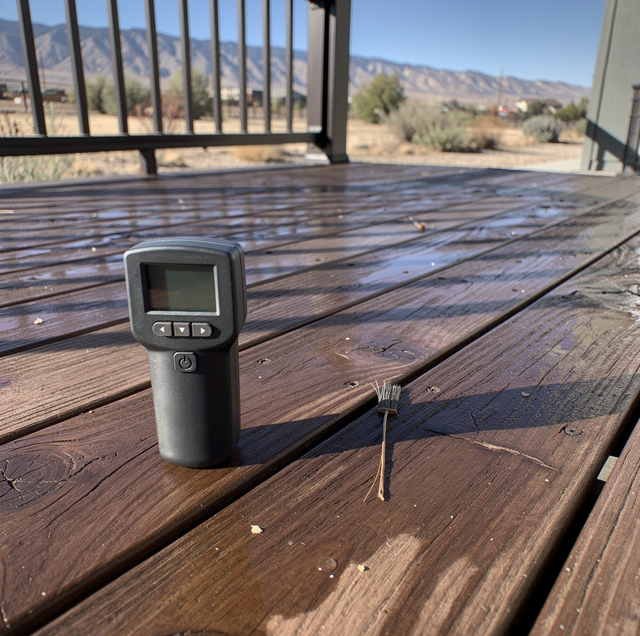
This is the step that gets rushed most often. Wood needs to reach a moisture content low enough for stain to penetrate properly, generally in the range that a pin-type or pinless moisture meter reads as ready rather than a guess based on how the surface looks. Depending on humidity and sun exposure, that can take anywhere from two to four full days after washing. Staining over wood that still retains surface moisture traps moisture beneath the new coat and is one of the most common causes of early peeling.
Step Five: Sand Raised Grain and Rough Spots
Pressure washing raises wood grain slightly even at low PSI, leaving a faint fuzzy texture once the wood dries. A light sanding pass, usually with a pole sander on the main deck surface and hand sanding on rails and spindles, knocks that texture down so the stain goes on smooth instead of soaking unevenly into raised fibers.
The Prep Sequence at a Glance
| Step | What happens | Why skipping it causes problems |
|---|---|---|
| Strip old finish | Chemical stripper breaks down failing stain or sealer | New stain only bonds to whatever's peeling underneath |
| Pressure wash | Low-PSI wash removes dirt, algae, and loose fibers | Too much pressure gouges wood; too little leaves grime that blocks penetration |
| Brighten | Oxalic acid treatment neutralizes chemicals and restores tone | Stain absorbs unevenly into wood that's still gray from UV exposure |
| Dry | Wood moisture drops to a level a meter confirms is ready | Staining over damp wood traps moisture and causes early peeling |
| Sand | Light pass knocks down grain raised by washing | Stain soaks unevenly into fuzzy, raised wood fibers |
What Changes for a Deck That's Never Been Stained Before
A brand-new deck skips the stripping step entirely, but it isn't ready for stain straight off the lumber yard either. New pressure-treated wood often still carries manufacturing moisture from the treatment process itself, on top of any moisture it's picked up while sitting outdoors before installation. Many stain manufacturers recommend waiting several weeks to a few months after a new deck is built before the first coat goes on, giving the treated lumber time to dry out from the inside rather than just on the surface. Staining new wood too soon is one of the more common reasons a first coat fails even when every other prep step was followed correctly.
Applying the Stain Itself
Semi-transparent stains let wood grain show through and need to be back-brushed, meaning worked into the wood grain with a brush after being applied by sprayer or roller, so it penetrates evenly along the direction of the boards rather than sitting in a puddle on top. Solid-color stains behave more like thin paint and form more of a surface film, which hides more wood grain but also means they can eventually peel the way a coating does rather than simply wearing thin the way a penetrating stain does.
Why Board Spacing and Gaps Matter
Debris trapped between deck boards holds moisture against the wood's end grain, which is far more absorbent than the flat face of a board. Clearing that debris out during washing, rather than just washing over it, keeps that trapped moisture from working its way up into the boards from the sides where stain has a harder time forming a full seal.
Frequently Asked Questions
Contractors generally look for wood moisture content in the range a moisture meter reads as dry, often cited around 15 percent or below for most stains to penetrate properly, rather than judging by whether the surface looks dry. A deck can look dry on top while still holding higher moisture a fraction of an inch into the board.
A rough field test some contractors use: splash a little water on a board in a shaded, less-exposed section. If it beads up and sits on the surface, the wood is dry enough to start absorbing product. If it soaks in fast and darkens the wood, the board likely still has surface moisture and needs more drying time. It's not as precise as a moisture meter reading, but it catches a deck that got rushed by a day or two before the first coat is wasted on wood that wasn't ready.
A wood brightener, usually an oxalic acid formula, pulls out gray, UV-damaged surface wood fibers and neutralizes tannin discoloration, restoring a more even base tone before stain is applied. Washing alone cleans dirt and algae but doesn't reverse that graying.
Different boards, even from the same lot of lumber, can vary in density and grain tightness, which affects how much stain they absorb. Tighter-grained, denser boards often take less stain and read lighter than more porous boards right next to them, which is a wood characteristic rather than a prep mistake.
Yes. New pressure-treated lumber often has a shiny surface skin called mill glaze left over from the milling process, and stain won't penetrate through it evenly. Light sanding or a specific new-wood cleaning product breaks through that glaze so the first stain coat absorbs properly.
As a general estimate, a quality semi-transparent stain on a horizontal deck surface commonly holds up somewhere in the range of two to three years before it needs a fresh coat, since horizontal surfaces take direct sun and foot traffic that vertical siding never sees, though actual lifespan varies with sun exposure, foot traffic, and the specific product used. Solid-color stains and less sun-exposed vertical rails often go longer between recoats.
Deck stain fails on a calendar most homeowners don't expect: not gradually over a few seasons, but within the first few months, right when the wood got rushed from wet to stained without the days in between to actually dry. Strip, wash, brighten, dry, sand, in that order, and the same board holds its stain the slow way instead. The wood decides which timeline it gets, and the drying step is usually where that decision gets made.
Schedule a free deck staining estimate — we'll prep the wood right so the stain actually holds. True Coat Painting serves Reno, Sparks, and Spanish Springs. Call (775) 227-0618.
