
Do You Need to Strip Old Exterior Paint Before Repainting
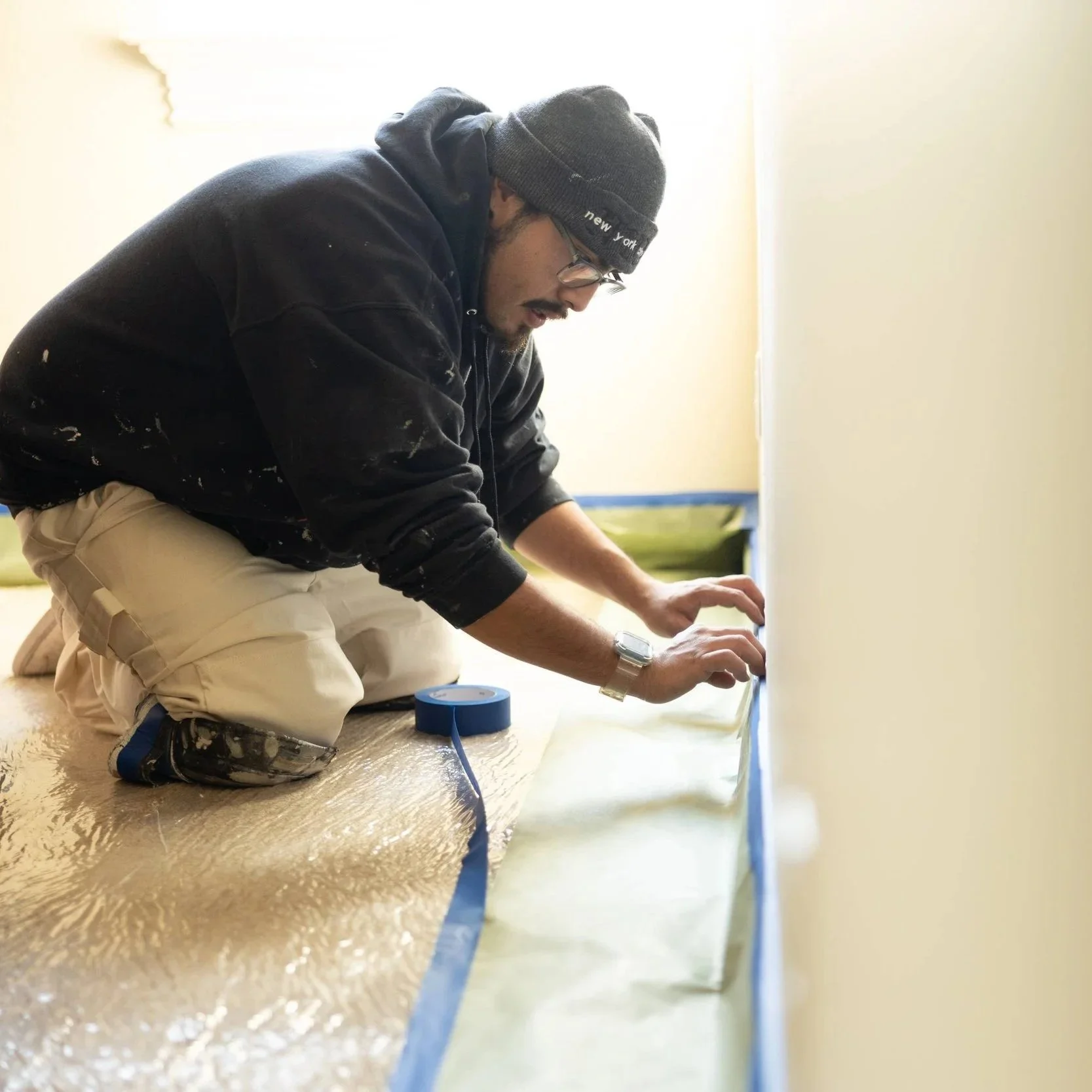
You ran a putty knife across the south wall last weekend and three things happened. A six-inch flake came loose under the kitchen window. The paint around the front door didn't budge. And a thumbnail-sized patch near the corner came up easy, leaving bare wood. Two painters walked the house this week. One quoted a wash, scrape, and repaint. The other said the whole south elevation had to come down to bare wood.
Same house. Two strategies that cost three thousand dollars apart.
Most exterior repaints don't need a full strip. You remove the paint that has already failed, feather the edges of the sound paint next to it, and prime the bare wood before the topcoat goes on. A full strip — taking every wall down to the substrate — only enters the picture in a few cases: paint failure across most of a wall instead of patches, an existing coating that is incompatible with what is going on next, a thick stack of old coats that has started cracking in geometric patterns, or a house built before 1978 where the prep work will disturb enough paint that lead containment becomes the better path.
For most houses, the workable answer sits between "paint over everything" and "strip the whole thing." A careful exterior painter walks the property, finds the spots that need to come off, scrapes those, leaves the rest, and treats the wall like a body of mostly-sound paint with bad neighborhoods to deal with.
What actually decides whether you strip
The decision tree below is the one a painter uses standing at the wall with a scraper in hand. Match what you're seeing to the row and the answer falls out.
| Condition on the wall | What it usually means | Strip or scrape? |
|---|---|---|
| Paint adheres everywhere; a scraper barely lifts it | Sound coating, minor chalking or fade only | Wash, light sand, spot prime, repaint |
| Peeling on less than 25% of one wall; rest is sound | Localized failure, usually moisture or sun | Spot scrape, feather, prime bare wood, repaint |
| Peeling across most of one elevation | Underlying cause is wall-wide (moisture, prep failure, paint type mismatch) | Full strip of that elevation, fix the cause first |
| Cracking in alligator pattern across the wall | Too many coats over time; coating has lost flexibility | Strip to bare substrate; the next coat will crack the same way otherwise |
| Latex over oil with adhesion failure | Wrong product over wrong substrate; bond never set | Strip the failed area to the oil layer or below; prime correctly |
| Paint dating to before 1978 | Likely lead-based | Contain, test, hire an EPA RRP-certified painter; full strip is often safer than partial |
| Switching from paint to stain | Stain needs to soak into bare wood | Full strip to bare wood — there's no shortcut here |
The biggest variable is the percentage of wall that has failed. There is no precise threshold — it is a judgment call — but a useful rule of thumb sits around the 25-to-40% mark. Below 25% failure on a wall, spot removal is almost always the right call. Above 40%, blending hundreds of small patches usually costs more than taking the wall down to bare substrate and starting clean.
"Strip," "scrape," "sand," and "wash" are four different words
Half the confusion in this conversation is vocabulary. Homeowners and painters often use the same word for different scopes of work, and the bid spreads reflect that.
| Term | What the painter is doing | When it applies |
|---|---|---|
| Wash | Power wash or soft wash to remove dirt, chalk, mildew, pollen | Every exterior repaint — the baseline prep |
| Scrape | Hand-scrape the loose, peeling, or lifting paint with a 4-in-1 tool | Standard spot-removal step on most repaints |
| Sand | Use sanding blocks, orbital sanders, or carbide scrapers to feather edges and rough surface for adhesion | After scraping, before priming bare wood |
| Strip | Remove all paint from the substrate — chemical, heat, infrared, or aggressive sanding | Full-failure walls, lead-paint disturbance, paint-to-stain conversions, thick alligator-coated coatings |
The word "strip" gets used loosely. A painter who says they'll "strip the south wall" might mean scraping everything that is loose and sanding the edges — which is really spot removal under a fancier name. Or they might mean a chemical strip that pulls the wall to bare wood. The bids look completely different. Read the line items, not the headline.
The four ways painters actually take paint off
When a wall really does need to be stripped, there are four common methods. The right one depends on the substrate, the paint chemistry, the lead-paint status, and how much you want to spend.
| Method | Speed | Cost per sq ft | Best for | Watch-outs |
|---|---|---|---|---|
| Hand scraping with a carbide scraper | Slow | $1 – $3 | Spot removal; small areas; lead-safe work | Tiring; only as good as the operator's patience |
| Chemical strippers (citrus, soy, methylene-chloride-free) | Slow but low-effort | $3 – $7 | Detailed woodwork, trim, historic restoration | Long dwell time; cleanup; not for vertical walls in volume |
| Heat gun or infrared (Speedheater, Silent Paint Remover) | Moderate | $4 – $9 | Wood siding with thick coats; lead-paint safe at low temp | Fire risk if pushed past 700°F; slow on vertical work |
| Aggressive sanding with a HEPA-vac-equipped sander | Moderate | $3 – $6 | Smooth substrates; small areas; lead-containment required | Generates fine dust; mandatory HEPA filtration on pre-1978 homes |
Pressure washing alone is not a stripping method. A heavy pressure wash can blast off paint that was already failing, but it also drives water deep into wood, lifts loose grain, and damages siding. Pros use it as a wash step, then come back later with a scraper and sander on what is still soft.
A full chemical or heat strip of one elevation on a 2,000-square-foot single-story home routinely runs $1,500 to $4,000 above the cost of the repaint itself. A full strip of the whole house can double the project. That is why the spot-removal path stays the default for any wall that has not crossed the failure threshold.
Why peeling paint keeps coming back if you skip the cause
Stripping the paint without fixing what made it fail is a way to spend money twice. Paint fails on exteriors for a short list of reasons, and skipping the diagnosis means the new coat will fail the same way in three to five years.
Moisture from inside the wall is the single most common driver of exterior peeling. Bathroom and kitchen vents that dump into a soffit instead of outside, missing or torn vapor barriers, ice dams that drive water back up under the eaves in winter — any of these pushes water out through the siding from the back side, and the paint comes off the front. Strip the wall, repaint it, and unless the vent gets rerouted or the leak gets sealed, the paint will peel again from the same spot.
Sun on a wall that previously had a paint type with no UV stabilizers is the second driver. A cheap exterior latex applied over an older oil-based primer often fails in three to five years on south and west elevations because the latex did not have the resin chemistry to handle the UV. Stripping is necessary on that wall; so is choosing a topcoat rated for the exposure.
The third is prep that was skipped the previous time. A painter who rolled latex over a chalky, unwashed wall ten years ago set up an adhesion failure showing itself now. The bond never formed. The new coat has to go over a wall washed, scraped, sanded, and primed — none of which the previous job did.
A real exterior bid names the cause it is solving for. "South wall peeling because the eave vent dumps moisture into the wall cavity — reroute the vent before stripping" is a different bid from "scrape and paint the south wall." One holds for ten years. The other holds for three.
What "good prep" looks like when no full strip is needed
For most houses where the paint is sound on most walls and failing in patches, the prep day looks like this.
The crew power washes or soft washes the whole exterior first, knocks down chalk and pollen, and lets the walls dry for a day or two, depending on temperature and humidity. They walk the elevations with a 4-in-1 scraper and pull every flake that lifts. They sand the edges of each scraped area to feather the transition from bare wood to sound paint — without feathering, the new paint job will show ridges where the old coat ended. They caulk any gaps at trim joints and around windows. They spot-prime every bare patch with an exterior primer matched to the substrate. Then the topcoat goes on across the whole wall, which blends the spot-primed patches into a uniform finish.
That is targeted removal with careful feathering — what the bulk of exterior repaints actually involve. A bid that includes those steps is the one that is going to last. A bid that skips the wash, the scrape, or the spot prime is the one that is going to peel from the same spots in four years.
FAQs
No. Paint that has already lost its bond to the wall will not hold the next coat any better than it held itself. The new layer adds weight to a coating that is already failing, and within months, the new paint comes off with the old. Every loose flake has to come off before the topcoat goes on — not necessarily every flake on the wall, but every flake in the area you are painting. Spot scraping followed by spot priming is the minimum baseline.
Not in the way a chemical or heat strip does. A high-pressure wash at 2,500 to 3,000 PSI can blast off paint that was already lifting, but it leaves intact paint alone and drives water deep into the wood. Pros use a wash as the first step in prep — to remove chalk, dirt, and mildew — and then come back with a scraper for what did not budge. Trying to use pressure washing as a substitute for scraping usually damages the siding before it removes the paint.
Any house painted before 1978 has a high probability of having lead-based paint somewhere on the exterior, especially under the top layers. The only way to confirm is to test — XRF testing by a certified inspector runs $300 to $600, and home-test swab kits run $20 to $40 for a quick read. Until you have tested, treat any pre-1978 paint as if it contains lead, which means EPA RRP-certified containment for any scraping, sanding, or stripping work.
For lead containment, yes. Chemical strippers keep the paint in a wet, contained form that gets scraped off and bagged as waste, instead of generating airborne dust. Modern citrus and soy-based strippers also avoid the methylene chloride that made older strippers dangerous to use indoors or in poorly ventilated areas. They take longer than sanding — dwell times run thirty minutes to several hours — but on lead-paint jobs, the trade-off is usually worth it.
A full strip and repaint of one elevation on a 2,000-square-foot single-story home runs $1,800 to $4,500 in 2026, depending on method, substrate, and lead-paint status. Heat or infrared stripping is at the lower end; chemical stripping with lead containment is at the higher end. Compare that to a wash, scrape, prime, and repaint at $800 to $1,800. Stripping is roughly two to three times the cost of spot removal.
Bare wood that has been stripped needs to dry to below 15% moisture content before primer goes on — typically 24 to 72 hours of dry weather, longer in humid conditions. Stripped wood also benefits from a light sanding to even out the texture, followed immediately by a stain-blocking primer to seal tannins and prevent bleed-through. Painters who rush from strip to topcoat in the same day usually see adhesion problems within the first year.
A good exterior bid names the cause before it names the strip
The choice between spot scraping and full stripping is not really a budget decision — it is a diagnosis. The bid you want is the one where the painter has already figured out why the paint failed before they tell you what they are going to do about it. South wall got cooked by ten years of high-altitude UV under a cheap latex topcoat? That wall needs to come down. South wall has three peeling patches around a leaky downspout? Those patches need to come off, the downspout needs to be fixed, and the rest of the wall is fine.
A painter who quotes a full strip without naming the cause is selling a procedure. A painter who quotes spot removal without checking underneath is selling a number. The painter who walks the house with a scraper, tests the bond every five feet, finds the pattern, and tells you which walls need which treatment is the one whose paint job is still holding ten years out.
