
How Long Does a Painted Kitchen Cabinet Finish Last
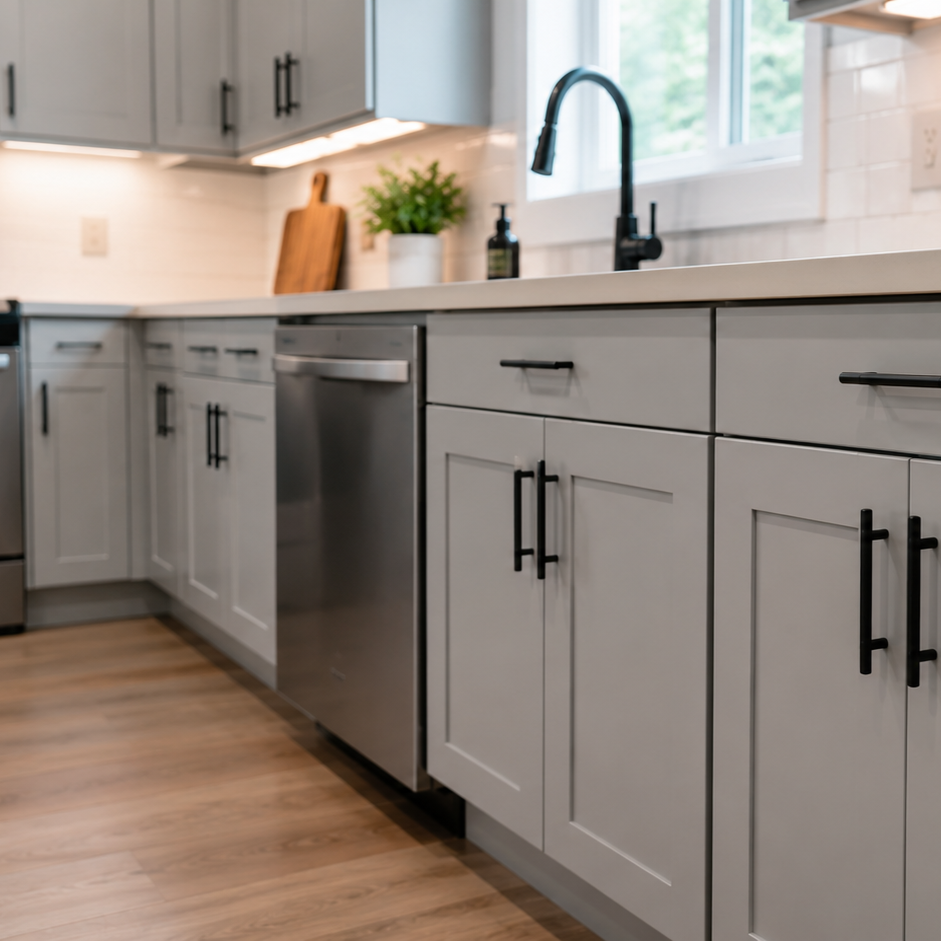
The door above the dishwasher used to feel solid under a fingertip. Two years in, there's a soft chip along the bottom edge where the steam hits, a hairline crack tracking the rail, and a slight tackiness when you close it after dinner. The painter swore that wouldn't happen.
It happens all the time. The reason has almost nothing to do with the color and almost everything to do with what was in the can, how it was put on, and what cleaner has been hitting the doors for the last twenty-two months.
A painted cabinet finish can last eighteen months or fifteen years. That gap is wider than for any other paint job in the house.
The honest range, by the coating system
A "painted cabinet" isn't one thing. The lifespan depends entirely on which coating system the painter used, and the homeowner usually doesn't find out until the failure mode shows up. Below is what each system delivers on doors that get normal kitchen use — hands on the pulls every day, steam from cooking and the dishwasher, occasional spaghetti splatter, and standard cleaning with a soft cloth and mild soap.
| Coating system | Application | Realistic lifespan | First failure point |
|---|---|---|---|
| Brushed latex wall paint | DIY or low-bid contractor, brush or roller | 18 months – 3 years | Chipping at the pull and drawer edge within a year |
| Brushed cabinet-grade enamel (waterborne) | Brushed by a contractor, no spray | 3 – 5 years | Burnishing at the pulls, soft chips near hinges |
| Sprayed cabinet-grade acrylic enamel | Sprayed off-site or in a booth | 6 – 10 years | Edge chips on heavy-use doors, sheen wear at pulls |
| Sprayed conversion varnish | Pro-grade spray, catalyzed | 10 – 15 years | Minor edge chips, dishwasher-door film |
| Sprayed post-catalyzed lacquer | Pro-grade spray, catalyzed | 10 – 15 years | Same as conversion varnish |
| Factory baked-on finish (original) | Conveyor-baked at the factory | 15 – 25 years | Yellowing on whites, chips on corners |
A homeowner who paid $1,800 for brushed latex over unsanded cabinets is on a two- to three-year clock, whether anyone said so or not. A homeowner who paid $4,000 for sprayed conversion varnish on degreased and primed cabinets is buying ten to fifteen years. The math sits in the coating choice and the prep, not in the paint can's marketing.
Why the gap is so wide
Walls take a hand brush across them maybe twice a year. A cabinet door above the dishwasher takes hot steam every night, a grease film from the kitchen air every week, a swipe with a wet cloth twice a week, and a thumbprint at the pull every time someone reaches for a coffee mug. Most paint chemistry doesn't survive that.
The binder is the first variable. Wall paint uses soft binders that flex with drywall movement. Cabinet-grade enamel uses harder binders that resist scuffing but need more skill to apply. Catalyzed coatings — conversion varnish and post-catalyzed lacquer — cross-link as they cure, producing a chemically bonded film that's closer to plastic than to paint. Once cured, the film resists water, household degreasers, and the constant micro-impacts of a closing cabinet door. Latex never crosses that threshold no matter how many coats go on.
Application is the second variable. Brushed cabinet finishes pick up brush marks, hold them through cure, and create texture that catches grease and finger oils. Sprayed finishes lay down flat, cure flat, and shed contaminants. A sprayed door that hasn't been opened for a week wipes clean with a dry cloth. A brushed door from the same job needs degreaser within a month.
Prep is the third, and the largest. A painter who skips the degrease step on cabinets that have been cooked in for a decade is laying premium paint over an invisible film of cooking oil. The film breaks the bond. Within six to eighteen months, the doors near the stove peel in strips. Most "the paint failed" complaints are really "the bond failed because nobody cleaned the cabinets first."
Cure time is the fourth. Paint that feels dry in four hours isn't fully cured for two to four weeks on cabinets. A finish that gets closed, leaned on, and aggressively cleaned in the first ten days hardens at a permanent disadvantage.
Where the finish dies first — every kitchen, same map
Painted cabinets don't fail uniformly. The doors and drawers that take the most hands concentrate the wear, and they fail in a predictable order. Look here first.
| Failure zone | Why it fails first | What you'd see |
|---|---|---|
| Door above the dishwasher | Steam hits the bottom rail every cycle | Hairline cracks along the bottom edge, soft chips at the corners |
| Drawer front under the cooktop | Grease vapor settles on the face daily | Sticky film that doesn't wipe off, dull patch in the center |
| Cabinet door under the sink | Damp towels lean on it, drips run down the inside | Lifting at the bottom, brown stain creeping up from the kick plate |
| Trash and recycling pullout | Constant pull-and-release at the same grip point | Burnish ring around the pull, chip at the top edge |
| Lower drawers near the trash | Hip and thigh contact, splash from cleanup | Worn sheen across the lower band of the drawer face |
| Door beside the refrigerator | Knuckle contact when reaching past the fridge | Flat scuff where the door meets the appliance |
| Doors above the stove | Grease + heat cycling | Yellowing on whites, lifting at the edge molding |
If three of those zones look worn but the rest of the kitchen looks fresh, the finish isn't done — the high-touch doors are. Spot-refinishing the worst four or five and matching the sheen on the rest adds three to five years before a full re-spray.
What "done" actually looks like
Wear and "done" aren't the same thing. A finish that looks tired might still be sound. A finish that's actually failing is doing one of five things, and any of them is the signal to plan a re-spray.
Edge chips down to bare wood are the first ones. Once the coating is breached at the corner of a door, daily steam and cleaning solution get under the film and lift it from the substrate. The chip grows from a ding to a flaked line within months. Filling and touching up a chip that small almost never blends — the patch reads as a different sheen even when the paint code matches.
Lifting at door edges and rails is the second. Latex over greasy wood pulls free at the seams first because that's where the film is thinnest. Run a fingernail along the bottom edge of a suspect door; if anything peels back, the bond is gone, and the door has to be stripped, not touched up.
Tackiness in the cure two weeks after the painter left, and any time after is the third. A fully catalyzed finish is hard to the point of feeling slick. A finish that stays soft or rubbery means the chemistry didn't cure — usually because oil-based primer was put down too thick, or because a catalyst was skipped. Soft finishes never harden on their own.
Hairline cracking along rails and stiles is the fourth. Wood expands and contracts with kitchen humidity. Flexible finishes move with it; brittle ones crack. Once a crack is visible, water from cleaning reaches the wood beneath, and the door is on a one-year clock before it warps.
Permanent dirt the doors won't release is the fifth. A cured cabinet finish should release dirt with a damp cloth and mild soap. Doors that hold a gray haze near the pulls, or a brown shadow above the stove, have either lost their finish or been cleaned with the wrong product. Either way, the next pass is a stripping question, not a cleaning one.
How to push the finish toward the long end of the range
The same coating system can land at year three or year twelve, depending on five habits the painter can't do for you after the truck pulls away.
Wipe up standing water within a day, especially around the sink and under the dishwasher. Water sitting on a cabinet finish for forty-eight hours penetrates even good catalyzed coatings.
Use a soft microfiber and a mild dish-soap solution for cleaning. Skip ammonia, vinegar straight, Magic Eraser-style abrasive pads, and any cleaner with the word "degreaser" on the label. Each breaks down the polymer binder a little, and the breakdown is cumulative.
Tighten the pulls and hinges every six months. A loose pull wobbles, and the wobble cracks the paint film around the screw within a year.
Add soft-close hinges if the doors slam. Slamming a $4,000 finish doubles the chip schedule on the latch-side edge.
Run the kitchen vent fan during cooking and for fifteen minutes after. Grease pulled out before it lands on the doors is grease that doesn't have to be cleaned off them.
All five habits together keep a finish two to four years longer than a kitchen that does none of them.
When a re-spray makes more sense than touch-ups
Once two or three doors show visible failure — chips down to wood, lifting at edges, tackiness — touching them up almost never blends. The new patch reads as a different surface even when the paint name and sheen match the original, because the surrounding finish has aged and the patch hasn't.
A re-spray of just the doors and drawer fronts on existing boxes runs roughly half of a full cabinet refinish. Kitchens fail at the doors first by a margin of years. Refinishing only the doors and drawer fronts, with the boxes touched up at the same sheen, buys another full life cycle for $1,200 to $2,500 — well under a full refinish and dramatically under a replacement.
The conversation to have with a painter is which coating system the previous job used and whether the next one should match or upgrade. A homeowner whose first job was brushed latex that failed at year two should not pay for the same product again. Stepping up to sprayed conversion varnish on the second pass usually buys a longer total life on the kitchen for less money over twenty years.
FAQs
Wall paint brushed onto kitchen cabinets lasts twelve to thirty-six months before chipping at the pulls, lifting at edges, and showing tackiness from incomplete cure. The doors above the dishwasher and beside the stove usually fail inside the first year. The materials cost alone for a DIY catalyzed-finish job runs higher than hiring out a sprayed cabinet enamel.
In a normal-use kitchen with average cleaning habits, yes — on doors that haven't taken impact damage. The numbers come from cabinet shops that have been doing the same finish on the same product for decades and warranty it accordingly. A house with two teenagers, a dog, and aggressive cleaners typically lands at eight to ten years on the high-wear doors and still gets the full fifteen on the doors nobody touches.
Certain doors give out first, almost without exception. The dishwasher-adjacent door, the trash pullout, the under-sink door, and the drawer front under the cooktop carry the wear for the whole kitchen. A finish that's done at year seven on those four is usually still fine on the upper cabinets across the room. That's why spot-refinishing the worst doors is a real option before a full re-spray.
No. Wax and polish products don't bond to cured cabinet finishes the way they bond to bare wood. They build a film on top that traps dust and grease, then has to be stripped before any future refinish. If a cabinet finish is showing wear, the answer is touch-up or re-spray — not topical treatments.
The film itself is the same. What's different is that yellowing shows up faster on white because there's nowhere for the discoloration to hide. A white finish on the same coating system as a dark green finish will show age by year five or six, while the dark green looks fresh at year eight. UV exposure and grease film accelerate yellowing on whites, especially above the stove.
If the finish has zero brush marks, lies dead flat, and feels closer to glass than to paint, it was sprayed. If you can run a fingernail across the surface and feel ridges or stipple, it was brushed. To tell catalyzed from non-catalyzed: water beaded on the surface for thirty seconds shouldn't leave a mark on a catalyzed finish; latex usually shows a faint ring.
Plan the finish around the kitchen you actually have
A finish lasts as long as the chemistry, the prep, and the cleaning habits let it. The cheapest path through the next ten years isn't the lowest quote — it's the coating system that matches how the kitchen gets used. A retired couple with one pot on the stove a night gets fifteen years out of an enamel that a family of five would chip through in two.
Ask the painter which coating system the quote covers, by name. Watch the cabinet doors come off the boxes and go to a spray booth instead of staying on for a brush job. Wait through the cure window before stress-testing the finish. Skip the ammonia spray. Those four decisions separate a five-year cabinet job from a fifteen-year one.
