
How Much Does Tenant Turnover Repainting Cost Per Unit
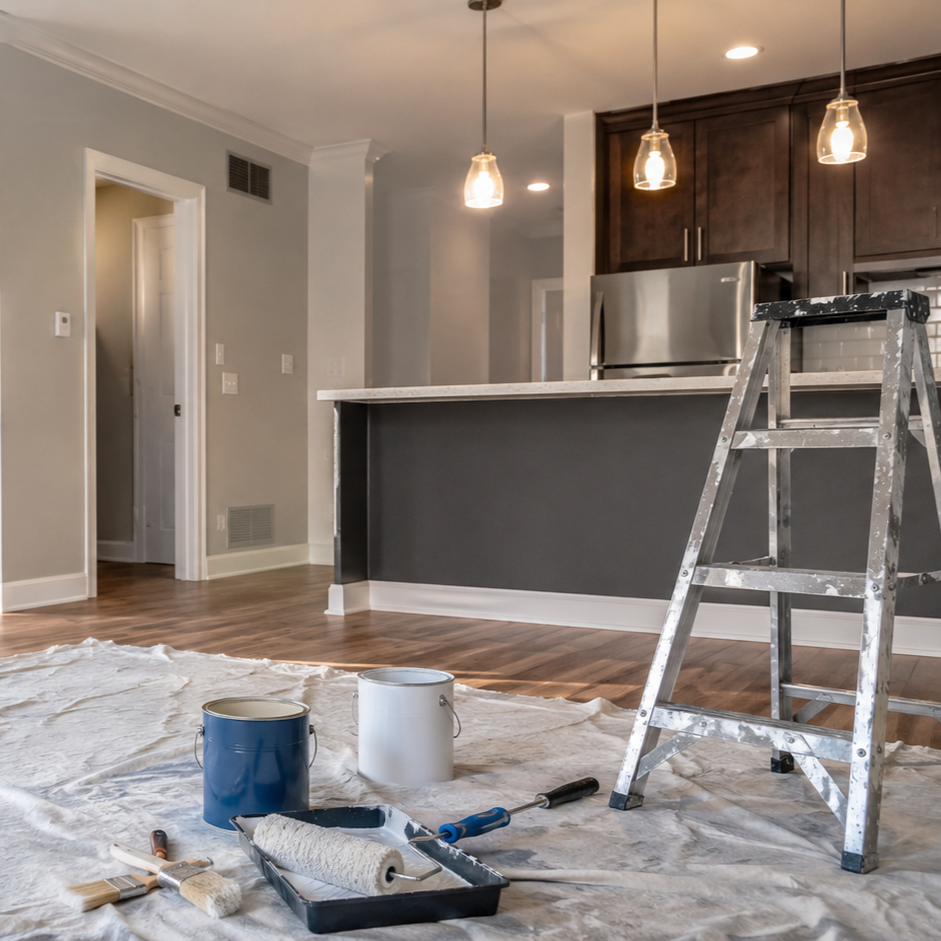
The tenant moved out on Tuesday. You are standing in the living room on Wednesday morning with a clipboard, sun coming in sideways through the bare windows, and the place tells the story of two years of normal living. Scuff marks where the couch sat. A grey halo above the kitchen stove. Nail holes from a gallery wall in the hallway. The bathroom door has a long blue streak where somebody slid a couch past it on move-in day.
Three painters are coming by. Two of them will quote a make-ready number. The third will hand you a per-room sheet. None of those numbers is going to match the next.
This is where most landlords and property managers lose track of what a turnover repaint actually costs.
What you are paying for in a turnover repaint
Turnover painting isn't the same animal as a regular interior repaint, and pricing it like one will either leave money on the table or hide a bid that doesn't include half the work.
A full interior repaint, done well, includes prep, light patching, primer where needed, two finish coats on walls, brushed trim, doors front and back, and clean cut lines around switches, outlets, and the ceiling. A turnover repaint compresses that work into a tight window — usually three to seven days between leases — and the bid has to account for things you don't deal with on an owner-occupied job: cigarette tar that needs to be sealed with a stain-blocking primer, the dog corner in the bedroom, the cooking grease on the kitchen ceiling, texture damage from picture hooks the size of quarters.
So when one painter quotes a turnover repaint at $800 and another quotes $1,600 on the same unit, they're often not pricing the same scope. One is assuming a paint refresh — clean walls, two coats. The other is assuming a full reset — degrease the kitchen, prime the smoke ceilings, patch and skim the bedroom corner, repaint everything back to leasing condition.
The cleanest way to read a turnover bid is to look at three things: which surfaces it covers, how many coats it includes, and what it does about the damage that's actually there.
Per-unit cost ranges in 2026
The numbers below assume one-bedroom through three-bedroom apartments in livable shape, mid-grade washable interior latex (typically eggshell on walls, semi-gloss on trim), normal door count, and a turnaround target of two to five days. Multi-unit portfolio pricing trends lower per unit because crews work fast when they're painting twenty identical floor plans. One-off small-landlord work trends higher.
| Unit size | Touch-up only | Refresh repaint | Full reset repaint |
|---|---|---|---|
| Studio (400–600 sq ft) | $150 – $350 | $400 – $750 | $900 – $1,500 |
| 1-bedroom (600–800 sq ft) | $200 – $450 | $550 – $1,000 | $1,200 – $2,000 |
| 2-bedroom (800–1,100 sq ft) | $300 – $600 | $800 – $1,400 | $1,600 – $2,800 |
| 3-bedroom (1,100–1,400 sq ft) | $400 – $800 | $1,100 – $1,800 | $2,200 – $3,800 |
| Townhome (1,400–1,800 sq ft) | $500 – $1,000 | $1,400 – $2,400 | $2,800 – $4,800 |
Touch-up only covers patching nail holes, hitting scuff areas with matched wall paint, cleaning crayon and shoe marks, and freshening one or two high-wear rooms. It works when the previous tenant kept the walls in good shape, and the existing color is something you can match from a saved formula.
Refresh repaint is one color, mostly the same as before, two coats on walls in every room, light prep, clean cut lines, doors, and trim spot-painted only where damaged. This is the standard turnover job between average tenants.
Full reset repaint is what you order when the unit needs to be returned to leasing standard from scratch — every surface, two coats, trim and doors painted in full, stain-blocking primer where needed, and patching of anything heavier than a nail hole. Smokers, pet damage, dark accent walls being returned to neutral, or a unit you're repositioning to a higher rent point all land here.
What actually moves the price up or down
The same one-bedroom can land anywhere from $550 to $2,000 on a turnover quote, depending on what the previous tenant did to it. The variables aren't mysterious. They are four things any painter sees inside the first ten minutes of a walkthrough.
| Cost driver | What it adds | Why |
|---|---|---|
| Smoking residue | +$150 – $500 | Walls and ceilings need stain-blocking primer or odor sealer before any topcoat will hold |
| Pet damage | +$100 – $400 | Patching, sub-floor cleaning, sometimes, a primer coat on baseboards where urine soaked in |
| Heavy color change | +$200 – $600 | Dark accent walls returning to white need a tinted primer plus extra topcoats |
| Texture and patch repair | +$150 – $500 | Picture hooks, hanging plant anchors, door slam dents, drywall divots from furniture |
| Trim repaint vs spot only | +$200 – $500 | Hand-brushed trim is slow; a full trim repaint can add a day to the job |
| Ceiling damage or smoke | +$100 – $400 | Kitchen ceilings need degrease and primer; bathroom ceilings often need mildew stain block |
Smoking residue is the single biggest line item in turnover painting. Tar embeds in the paint film itself, and a regular topcoat over a smoker's wall ghosts back through within weeks. Primer over smoke isn't a marketing upgrade. It's a structural requirement, and the primer alone runs $40 to $60 a gallon for the shellac-based versions that actually hold. A two-bedroom unit with smoke damage can easily add $400 to a turnover bid before any finish paint goes on.
Pet damage shows up in places most landlords miss until the painter finds them. Cat urine sometimes wicks up behind baseboards. Dog scratches at the entry door eat through the topcoat and the primer below it. Both need patching plus stain-blocking before the wall paint goes back on.
Heavy color changes — the navy accent wall, the dark red dining room, the kid's bedroom in saturated turquoise — almost always take a tinted primer plus two finish coats to hide. Skipping the primer is the most common way to make a turnover bid look cheap on paper and ugly on the wall.
Touch-up or full repaint — running the actual math
The cheaper option isn't always the better economic choice once you factor in vacancy. A touch-up that wraps in two days and lets you list the unit on Saturday morning beats a full repaint that takes five days and pushes the listing into the following week — sometimes.
Here's the math that decides it. Most U.S. rental markets run a daily vacancy cost equal to about three percent of the monthly rent. A $1,800-a-month unit loses roughly $60 a day vacant. A $2,400-a-month townhome loses $80 a day. So adding three days to a turnover to get a full repaint instead of a touch-up costs $180 to $240 in vacancy on top of the labor difference.
The full repaint usually still wins when the unit is being marketed at the top of its rent band and the photos have to look fresh, when the previous tenant's color choices are visible in any way, when the unit has been touched up three or four turnovers in a row and is starting to look it, or when you're repositioning to a different tenant profile.
The touch-up wins when the previous tenant kept the walls in good shape, the existing color is current and broadly appealing, the rental market is tight enough that two extra listing days bite hard, and the next tenant is the same profile as the last one.
A useful rule for portfolios: full repaint at a minimum every third turnover, regardless of condition. Touched-up walls accumulate small color variations, sheen variations, and patched areas that show in raking light. By the third year of touch-ups, the unit starts to look tired in listing photos even when each individual repair was done well.
How many days a turnover repaint actually takes
A two-person crew with a clean unit in front of them runs about as follows. The timeline matters because every extra day before the listing goes live is a day of lost rent.
| Job type | Studio | 1-bedroom | 2-bedroom | 3-bedroom | Townhome |
|---|---|---|---|---|---|
| Touch-up only | 0.5 day | 0.5 – 1 day | 1 day | 1 – 1.5 days | 1.5 days |
| Refresh repaint | 1 day | 1 – 1.5 days | 1.5 – 2 days | 2 – 2.5 days | 2.5 – 3 days |
| Full reset repaint | 1.5 days | 2 – 2.5 days | 2.5 – 3 days | 3 – 4 days | 4 – 5 days |
A crew of three on a coordinated multi-unit run can compress these by 20% to 30% — that's the volume advantage property managers with in-house painters or preferred-vendor relationships often see. A solo painter on a one-off unit runs 30% to 50% longer.
If the unit needs significant repair work — drywall replacement, water damage remediation, popcorn ceiling work — the painting can't start until that work is done. Tacking those days onto the turnover timeline is where a lot of small landlords get caught short on rent projections.
FAQs
The rough rule across the property-management industry is a full repaint every two to three years or every third turnover, whichever comes first, with touch-ups in between. Higher-turnover units — student rentals, short-term-to-long-term conversions, units with pets — skew toward more frequent full repaints. Long-term tenants in well-maintained units can sometimes stretch to a fourth or fifth turnover before a full reset is needed.
Some can, some can't, and it depends on the lease language and the local jurisdiction. The defensible costs are usually the ones tied to specific damage — nail holes beyond reasonable wear, pet stains, smoke damage, and paint colors that were changed without permission. General turnover repainting between average tenants is almost always treated as normal wear and tear and stays with the owner. Document everything with photos at move-in and move-out, and itemize specific damage rather than charging a flat repaint fee.
Yes, and the savings compound across a portfolio. A single wall color, a single trim color, and a single ceiling color across every unit means the painter doesn't carry multiple gallons to the truck, doesn't open new product lines for each unit, and can mix touch-up paint from one formula sheet. Most turnover crews offer a discount of 5% to 15% on portfolios that standardize colors, and matching touch-ups become trivial. The most common portfolio choice is a warm off-white or light greige on walls, white semi-gloss on trim, and a flat ceiling white.
A single accent wall going from a deep saturated color back to white typically runs $150 to $300, depending on wall size and how dark the original color was. Most dark accent walls need a tinted primer coat plus two finish coats to hide cleanly, and the time isn't in the rolling — it's in the drying between coats.
Often, yes. Multi-family-grade paints are formulated for higher scrub resistance, lower VOC, faster recoat times, and uniform sheen — properties that matter when crews are repainting twenty units in a month. The product costs $5 to $15 more per gallon than retail consumer paint but lasts noticeably longer in high-traffic conditions and touches up more cleanly across multiple repaints.
Prime. Always. Nicotine and tar bleed through standard topcoats within weeks because the staining compounds are soluble in the paint binder. The only fix is a shellac-based or oil-based stain-blocking primer applied to every affected surface before any topcoat goes on. Heavier topcoats don't work — the tar wicks up through the wet paint as it dries.
How to plan repaint costs across a rental portfolio
The owners and property managers who keep turnover paint costs predictable do three things consistently. They set a paint budget per unit per year — not per turnover — and treat it as a fixed operating cost. They standardize colors and products across the portfolio so any painter can pick up a unit on short notice. And they photograph every unit's paint condition at every turnover, so the decision between touch-up and full repaint is grounded in evidence rather than memory.
The painter you want for turnover work is the one who walks the unit, opens the closets, looks at the kitchen ceiling, asks what your timeline is, and gives you a bid that explicitly says touch-up or refresh or full reset — and breaks out what's included in each. A bid that just says "interior paint" without naming the scope is a bid that turns into change orders by Wednesday afternoon.
