
Latex vs Oil-Based Paint for Interior Trim: Which Lasts Longer
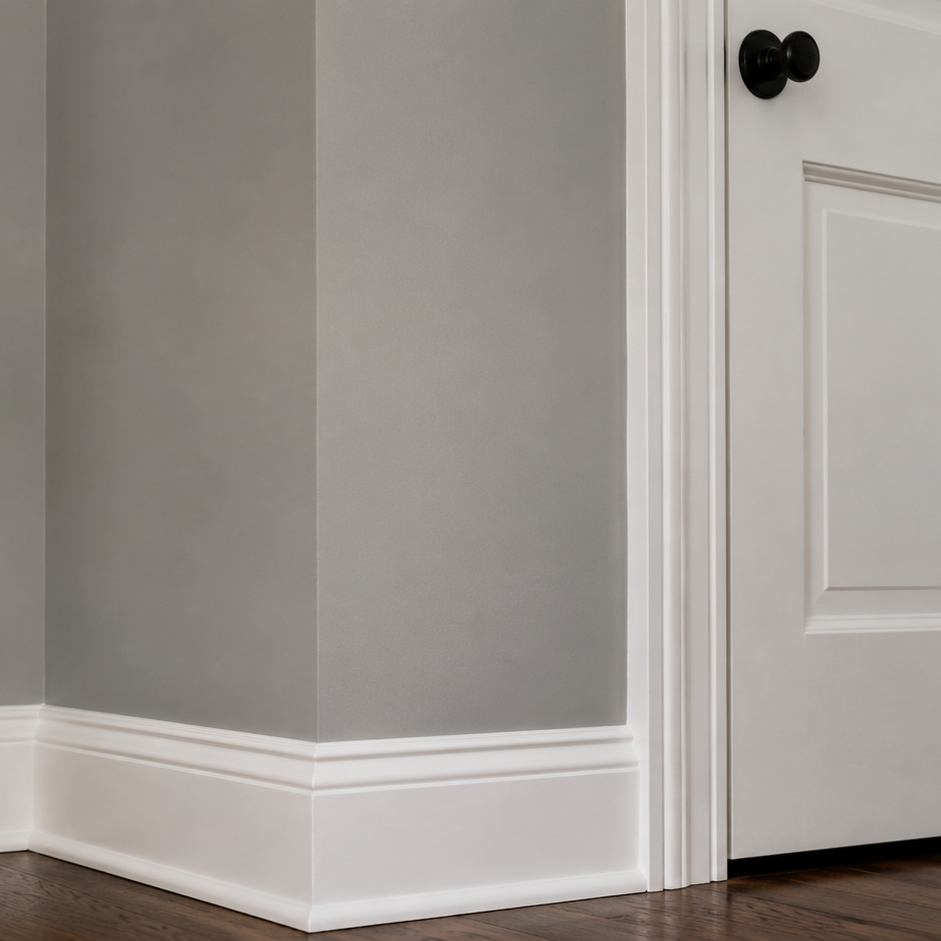
Run your hand down the door casing in the front hallway. If the house is old enough, the trim feels glass-smooth and almost cool to the touch. Walk into the bedroom where someone repainted the trim three years ago. That casing feels slightly softer, a little warmer, and there's a faint dent where the doorknob has been hitting the wall. Same wood underneath. Two completely different paint films on top.
The hallway is oil-based enamel from a previous era. The bedroom is acrylic latex. Both look fine from across the room. Up close, they age in opposite directions.
Most people frame this as oil vs latex. That hasn't been the real question for about a decade. The comparison now runs three ways: legacy oil-based enamel, modern acrylic latex, and a newer category called waterborne alkyd (also sold as hybrid enamel). Each one wins at something different, and the wrong choice on a high-touch surface like trim shows up in the first year.
What the two old categories actually do
Paint is a binder holding pigment to a surface. The binder is where oil and latex part ways, and the binder is the whole story for trim.
Oil-based trim paint uses an alkyd binder dissolved in mineral spirits. As the solvent evaporates, the alkyd resin oxidizes — it pulls oxygen out of the air and cross-links into a hard, dense film. The result feels almost like enamel on a kitchen appliance. It levels out brush marks as it dries, fills the texture of the wood, and ends up smoother than the brush that applied it. Once cured, it resists scuffs, fingerprints, and the kind of repeat impacts that trim takes — door corners hitting baseboards, vacuum heads bumping casings, shoes kicking the kickplate by the back door.
Acrylic latex trim paint uses acrylic polymer particles suspended in water. As the water evaporates, the particles fuse into a continuous film. That film is more flexible than oil, which is why latex moves with wood through humidity swings without cracking. It dries fast, cleans up with soap and water, has low odor, and holds its original color for years. The downside is the same flexibility — a softer film dents, scuffs, and marks more easily. Latex trim that's seen a year of normal household traffic looks lived-in in a way oil trim doesn't.
Oil gives you hardness and a glassy finish. Latex gives you flexibility, cleaner air, and a film that doesn't amber.
The yellowing problem with oil
Walk into any house painted before 2005 and look at the trim on an interior wall that hasn't seen daylight. Behind a piece of furniture. Inside a closet. On a stair landing with no window. If the trim was painted white with oil-based enamel, it's almost certainly not white anymore. It's somewhere between cream and pale yellow.
That ambering happens because the alkyd resin keeps oxidizing after it cures. In sunlight, UV breaks down the byproducts of that oxidation, and the trim stays close to its original color. In the dark, the byproducts build up and tint the film yellow. Two pieces of trim painted the same day can look like different colors a decade later — one drifting toward warm cream in the bedroom, the other still bright where the south window hits it.
Acrylic latex doesn't do this. The pigments stay where they were the day the paint went on. Closets, low-light hallways, and the inside faces of cabinet doors all hold their original color for the life of the coating.
How each one fails
Trim paint never wears uniformly. It fails at specific points — door edges, baseboards near doorways, and the inside of cabinet doors that get touched daily. The failure pattern is different for each paint type, and the pattern tells you which one is showing its age.
Oil-based trim chips. The film is hard enough that an impact concentrates damage in one spot — a sharp edge of paint comes off in a flake the size of a dime, exposing primer or bare wood. The surrounding paint stays intact. Touch-up is hard because the chip leaves a visible edge that a single brush stroke won't blend into the glass-smooth surface around it.
Latex trim scuffs and dents. The film bends with impact, so it rarely chips off cleanly. It picks up shoe scuffs along baseboards, fingerprint marks around door handles, and small dents from anything that hits it. After a few years, the wear zone looks tired even though no paint has actually come off. A wet-cloth wipe-down brings most of it back. The rest is touch-up — easier than oil because new latex blends into old latex.
Oil trim under normal use wants a full repaint at 8 to 12 years. Latex trim wants one at 5 to 8 years because the wear is uniform, and the room starts looking dingy even where the film is technically intact.
| Property | Oil-based alkyd | Acrylic latex | Waterborne alkyd (hybrid) |
|---|---|---|---|
| Hardness when cured | Very hard, glass-smooth | Moderate, slightly soft | Hard, near-oil |
| Leveling (brush marks fill in) | Excellent | Fair to good | Very good |
| Yellowing over time | Significant, especially in dark areas | None | Minimal |
| Flexibility (moves with wood) | Low — can crack at joints | High | Moderate to high |
| Typical recoat interval | 8 – 12 years | 5 – 8 years | 8 – 12 years |
| Dry to recoat | 12 – 24 hours | 4 hours | 4 – 6 hours |
| Cleanup | Mineral spirits | Soap and water | Soap and water |
| Odor / VOCs | Strong, high VOC | Low | Low |
| Availability (2026) | Limited in many states | Widely available | Widely available |
| Best for | Restoration matching, very hard wear in old homes | High-traffic family rooms, fast turnaround | Most modern interior trim jobs |
The third category most homeowners haven't heard of
There's a third option on the trim shelf at every paint store, and it's what most painters are reaching for in 2026. It's called waterborne alkyd, hybrid enamel, or acrylic-alkyd hybrid, depending on the brand — chemistry that didn't exist in usable form twenty years ago.
The alkyd resin that gives oil paint its hard, glassy film is suspended in water instead of mineral spirits. It goes on like latex, cleans up with soap and water, smells like latex, and dries in about the same time. As it cures, the alkyd cross-links the same way it does in oil paint — pulling oxygen, hardening into something close to enamel. The finished film is harder than acrylic latex, smoother than acrylic latex, and ambers far less than traditional oil.
Oil-based interior trim paint is also getting harder to buy. Several states have tightened VOC limits to the point where true solvent-borne alkyd enamel is either pulled from shelves or sold in a low-VOC version that doesn't perform like the old stuff. Sherwin-Williams ProClassic Waterborne, Benjamin Moore Advance, and similar products from other manufacturers all fit this hybrid category. Painters have been moving to them quietly for years.
For a homeowner repainting trim today, the hybrid is the answer most of the time. Oil-based enamel is for restoration jobs where matching an existing oil finish matters, or very hard commercial trim where every drop of hardness counts.
The trap with painting latex over old oil
Most pre-2000 interior trim in this country was painted with oil-based enamel. If a house has white trim that was last repainted decades ago and feels glassy under a fingernail, assume oil unless tested otherwise. Putting modern latex straight over that oil without a bonding primer is the most common interior paint failure.
The mechanism is grip. Oil enamel cures to a slick, low-energy surface that water-based paint can't physically bond to. Fresh latex over old oil sits on top like a sticker on a glass jar. For the first few weeks it looks fine. Then someone wipes the trim with a damp cloth, or the door knocks the baseboard — and the latex peels off in a sheet.
The test is quick. Wet a cotton ball with rubbing alcohol or acetone and rub a small spot on the trim for fifteen seconds. If color comes off on the cotton, it's latex underneath and you can paint latex over it without issue. If the cotton stays clean, it's oil. Old oil trim needs a bonding primer — an adhesion primer or shellac-based primer — before any water-based paint goes on. The primer grabs the slick oil surface, gives the latex something to bite into, and the new coat stays put. Scraping off failed latex and starting over is two to three times what it would have cost to prime first.
When oil-based is still the right call
A few situations still favor the old stuff. Pre-war homes with original oil trim sometimes need a single section replaced — a damaged baseboard, a new door installed where one was bricked over. Matching the new piece to the surrounding oil enamel is cleaner with oil enamel. Hybrid gets close but not identical, and the difference is visible at the seam in raking light.
Stair handrails in busy commercial buildings, kick plates in school hallways, trim around heavy industrial doors. On those surfaces, old-school oil enamel still beats hybrid alkyd on pure scuff resistance by a small margin, and the margin matters more than the dry time and cleanup hassle. Some historic preservation projects also require oil finishes by contract. A homeowner with normal interior trim almost never falls into one of these cases. For everything else, hybrid alkyd or premium acrylic latex is the right answer in 2026.
FAQs
The cotton ball test is the fastest way. Soak a cotton ball or cotton swab in denatured alcohol or acetone, rub a small spot on the trim hard for ten to fifteen seconds, and check the cotton. If paint color transfers to the cotton, the existing finish is latex. If the cotton stays clean and the trim looks unchanged, it's oil. Test in a hidden spot first — behind a door, under a vanity — because the test can dull the sheen.
You can, but the trim will fail faster. Wall paint is built for a vertical surface that gets touched rarely. Trim paint is built for hand contact, scuffs, and direct impact. Wall paint applied to a baseboard ends up scuffed within months. Trim paint costs a few dollars more per gallon and lasts years longer in service.
That's called blocking. Latex film stays slightly soft for a while after it dries to the touch, and surfaces that press against each other — a door against its jamb, a window sash against its frame — can stick or pull paint off when opened. Hybrid alkyd and oil-based don't do this because they cure to a harder, slicker surface. If a freshly painted latex door is sticking, leave it open for several days and lightly dust the contact edge with talc to break the bond.
The odor is the solvent — mineral spirits — evaporating as the paint dries. It's strong enough that most state air quality boards have restricted oil-based interior trim paint to lower-VOC formulations than were sold a generation ago. Ventilation during application and for at least 24 hours after is non-negotiable. People with asthma, chemical sensitivities, or pregnant residents should avoid the house during oil-based interior application. Waterborne alkyd hybrids deliver similar performance at a fraction of the VOC load.
Most trim jobs need two coats regardless of paint type, with light sanding between coats. Some premium hybrid alkyd products self-level well enough to hit acceptable coverage in one heavy coat, but two thinner coats almost always look better than one thick one. Oil-based enamel often needs the same two coats but with much longer dry times between — meaning a full trim repaint with oil can stretch across three or four days where the hybrid version finishes in one.
It can chip under hard impact, the same way oil does — the harder the film, the more it behaves like a brittle shell when something concentrated hits it. The chip pattern looks similar: a defined flake rather than a worn smear. The difference is touch-up. Hybrid alkyd touch-up blends cleaner than oil enamel because the recoat dries with more reliable gloss matching. A small chip in hybrid trim is usually invisible after one careful brush stroke.
What to put on your trim if you're repainting today
For most homeowners repainting trim in a normal occupied house, the answer is a waterborne alkyd hybrid in semi-gloss. It gives a finish close to old oil enamel without the dry time, the solvent smell, the ambering, or the bonding headaches. It plays nicely over existing latex with light prep, and it grips well over old oil once a bonding primer goes down first. Cleanup is soap and water, the room is usable the next morning, and the trim looks the same in year ten as it did in year one.
If the house has old oil trim and only one piece is being touched up, match in oil enamel. Outside of that case, the hybrid is the better choice for almost any room.
The kind of paint matters less than the prep underneath it. A cheap trim paint over sanded, primed, dust-free wood will outlast a premium trim paint slapped onto glossy, dirty, ungreased trim every time. Whatever paint goes on the brush, the trim takes a beating for a decade — and a decade is a long time to live with the choice.
