
Why Stucco Needs Different Paint and Prep Than Wood
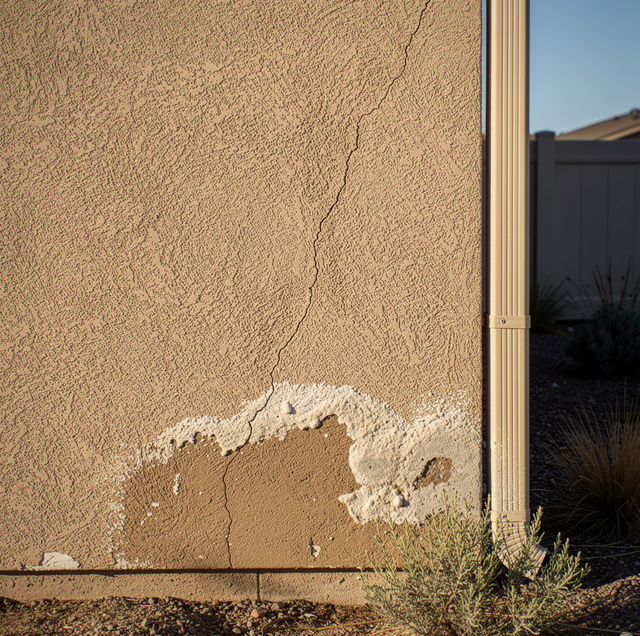
It's tempting to treat stucco like any other exterior wall: pressure wash it, prime it, roll on the same paint used everywhere else on the house, and call it done. That approach is exactly how many stucco paint jobs end up blistering, peeling in sheets, or trapping white mineral deposits under the topcoat within a year or two. Stucco isn't wood or drywall wearing a different texture. It's a cementitious material with its own chemistry, and painting it like anything else skips the steps that actually make a coating last.
Stucco Is Still Curing Chemically Long After It Looks Finished
Fresh stucco is a cement-based material, and cement continues a chemical curing process for weeks after it's applied, even once it looks and feels dry to the touch. During that process, stucco is highly alkaline, meaning it has a high pH that can chemically break down certain paint resins on contact. Painting new stucco too soon, often within the first month, risks that alkalinity attacking the paint film from underneath before it's ever had a chance to fully bond.
Why Breathability Isn't Optional on Stucco
Stucco is porous and, especially in older homes, sits over layers that were never designed to be fully sealed against moisture. Moisture that gets into a wall system needs a way to move back out, and a paint film that's too rigid or too much of a vapor barrier can trap that moisture behind it instead of letting it escape. That trapped moisture causes blistering and bubbling on stucco walls painted with the wrong product, since the moisture has nowhere to go but to push the paint film off the surface from behind.
Elastomeric Paint Solves a Problem Standard Acrylic Doesn't
Standard acrylic exterior paint works well on wood and many other surfaces, but stucco develops hairline cracks as the material naturally expands and contracts, and a standard paint film isn't flexible enough to move with those cracks without cracking itself. Elastomeric coatings are formulated with far greater stretch than standard paint, thick enough to bridge small hairline cracks and flex with the wall's minor movement, rather than splitting along the same crack line. That flexibility is specifically why elastomeric coatings get used on stucco far more often than on wood siding, which doesn't develop the same kind of surface cracking.
Sorting Hairline Cracks From Structural Ones
Not every crack in stucco is a coating problem. Thin, spiderweb-style hairline cracks, generally under a hair's width, are typical surface movement and get filled with a flexible, elastomeric-compatible patching compound before painting. Wider cracks, especially ones that run in a fairly straight diagonal line or that have a visible step or offset on either side, can point to movement in the structure underneath and are worth having assessed before simply patching over them, since paint and patching compound won't address whatever is actually causing that kind of crack.
Stucco vs. Wood Siding: What Actually Changes
| Requirement | Wood siding | Stucco |
|---|---|---|
| Cure time before painting | Not applicable for existing wood; new wood just needs to be dry | New stucco often needs 30 to 90 days to finish curing chemically |
| Surface chemistry | Neutral; standard primers bond fine | Highly alkaline when new, which can break down the wrong primer |
| Cracking behavior | Minimal surface cracking under normal conditions | Hairline cracking is normal as the material expands and contracts |
| Coating flexibility needed | Standard acrylic flexibility is generally enough | Elastomeric coatings bridge hairline cracks that rigid paint can't |
| Washing method | Moderate-pressure wash with a wide fan tip | Soft wash: lower pressure plus a cleaning solution with dwell time |
Texture Affects How Much Product a Stucco Job Actually Takes
Stucco's surface texture, whether it's a fine sand finish, a heavier dash texture, or a deep hand-troweled pattern, has far more surface area per square foot than a flat wall once every peak and valley is accounted for. That extra surface area means stucco absorbs noticeably more primer and paint than a smooth wall of the same size, and painters typically plan for a heavier coating rate on textured stucco than they would on flat siding, since trying to stretch the same amount of material to cover both simply leaves the deep pockets under-coated.
What Efflorescence Tells You Before You Paint
A white, powdery, salt-like deposit on stucco, called efflorescence, forms when water moves through the material and evaporates at the surface, leaving mineral salts behind. It's a sign that moisture has been moving through that section of wall, and painting directly over it without addressing the moisture source and removing the deposit first, usually with a stiff brush and a mild acidic cleaner, means the new paint is bonding to a loose salt layer that will keep re-forming underneath.
Priming: Why a Standard Wall Primer Falls Short
Because of stucco's alkalinity and texture, a masonry-specific or pH-neutral primer is used instead of a standard wall primer, specifically formulated to resist breaking down when it contacts an alkaline surface. Getting that primer worked into the texture, rather than just rolled across the surface peaks, also matters: stucco's deep pockets and valleys need the primer pushed into them, often with a thicker nap roller than would be used on a flat wall, or those low spots end up under-primed while the high points look fully coated.
Frequently Asked Questions
Some painters check with a simple pH test strip pressed against a dampened section of wall. A reading still in the low double digits means the cement is holding enough alkalinity to attack a standard primer, while a reading closer to neutral signals the cure has progressed far enough to move forward. It's a more reliable check than the calendar alone, since cure speed varies with humidity, temperature, and the thickness of the stucco application.
A quality masonry primer helps, but standard acrylic topcoats still lack the flexibility to bridge stucco's hairline cracking the way an elastomeric coating does, so many painters use elastomeric specifically over the primed surface rather than a standard finish coat, even when the primer itself is correct for the substrate.
Bubbling usually means moisture trapped behind the paint film is trying to escape and has nowhere to go, often because the coating used wasn't breathable enough, or because a moisture source, like a leaking gutter or missing flashing, was never addressed before painting. Repainting over a bubbled area without fixing the moisture source just repeats the failure.
Often, yes. Over-pressured washing tends to leave telltale marks a painter checks for before ever picking up a sprayer: small circular divots where a wand tip sat too close, a spray of fine chip marks radiating out from one spot, or a slightly fuzzy, eroded look to the sand finish where the surface coat got scoured thin. Any of that gets patched and re-textured before priming, since coating over eroded texture just seals in an uneven surface.
Contractors sometimes glue a small crack monitor, a two-piece gauge with a printed scale, directly across a questionable crack and check it every few weeks. If the two halves stay aligned, the crack is stable and gets filled like any other hairline crack. If they shift apart over time, that points to ongoing movement in the underlying structure, which is worth having assessed before any paint or patching compound is applied over it.
Brushing the white deposit away and monitoring the same spot for a few weeks, especially after rain, shows whether it returns. If it reappears, moisture is still actively moving through that section of wall and needs to be traced to its source before repainting, rather than just cleaning and coating over it again.
Stucco is cement wearing a coat of paint, not wood pretending to be tougher, and every step above traces back to that difference: the pH, the porosity, the way the material itself expands and contracts with the seasons. Coated on its own terms, cured, primed for its alkalinity, finished with something flexible, a stucco wall holds up the way it's supposed to for well over a decade. Coated like it's just another piece of siding, the wall is fighting its own material from the very first coat.
Schedule a free stucco painting estimate — we'll match the primer and coating to what your walls actually need. True Coat Painting serves Reno, Sparks, and Spanish Springs. Call (775) 227-0618.
